
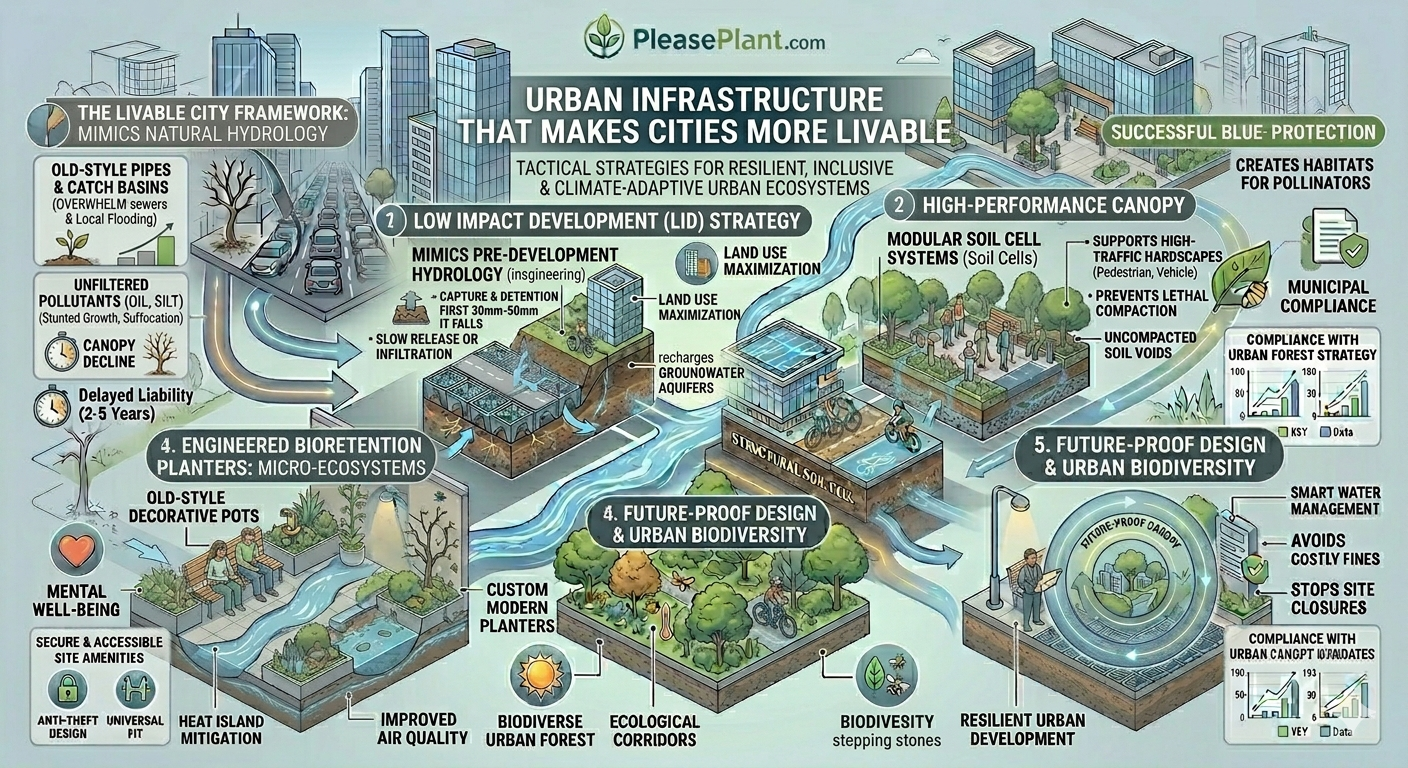
Urban Infrastructure That Makes Cities More Livable
If you’ve ever found yourself lingering in a sun-drenched plaza in Yaletown or taking a breather along the revitalized corridors of Langley, you’ve experienced the quiet power of "soft" infrastructure. While we often think of urban infrastructure Vancouver in terms of bridges and transit lines, the true livability of a city is determined by the smaller, tactile elements at street level. These are the tools that transform a transit route into a destination.
Anyone who has worked on a development in the Fraser Valley knows one thing: rain will always win if you ignore it. But once the drainage is sorted, the next challenge is humanizing the scale of our urban centers in Abbotsford, Surrey, and Chilliwack.
The Social Fabric of Public Space
The real issue developers and municipal planners face is the "transit" nature of modern streets. Without thoughtful public space infrastructure, cities become places we merely move through, rather than places we inhabit. Urban amenities serve as the social glue that fixes this problem:
-
Benches and Seating: These provide essential rest points, encouraging "dwell time" and supporting a more inclusive environment for all ages.
-
Bike Racks: High-quality bicycle parking is no longer an "extra"; it is essential urban infrastructure Vancouver that supports the shift toward active transportation.
-
Architectural Planters: These vessels do more than hold greenery; they define boundaries, soften the "hard" edges of concrete buildings, and can even assist in stormwater management.
City Landscape Design as a Competitive Advantage
For developers, investing in premium city landscape design is a strategic move. A project that prioritizes the pedestrian experience through high-quality site furnishings feels safer, more vibrant, and more "high-end". In a region as competitive as the Fraser Valley, these details are what attract high-quality tenants and foster community pride.
The Designer’s Perspective
From a planning perspective, the goal is to create a seamless experience where the infrastructure feels like a natural extension of the architecture. By integrating these elements early—rather than as an afterthought—we build cities that are resilient, functional, and deeply livable.
Conclusion
Building a better city starts with the details. By choosing robust, well-designed pedestrian infrastructure, we can ensure our urban spaces in BC are prepared for the future.
To learn how our range of site furnishings can elevate your next development, contact Please Plant.