
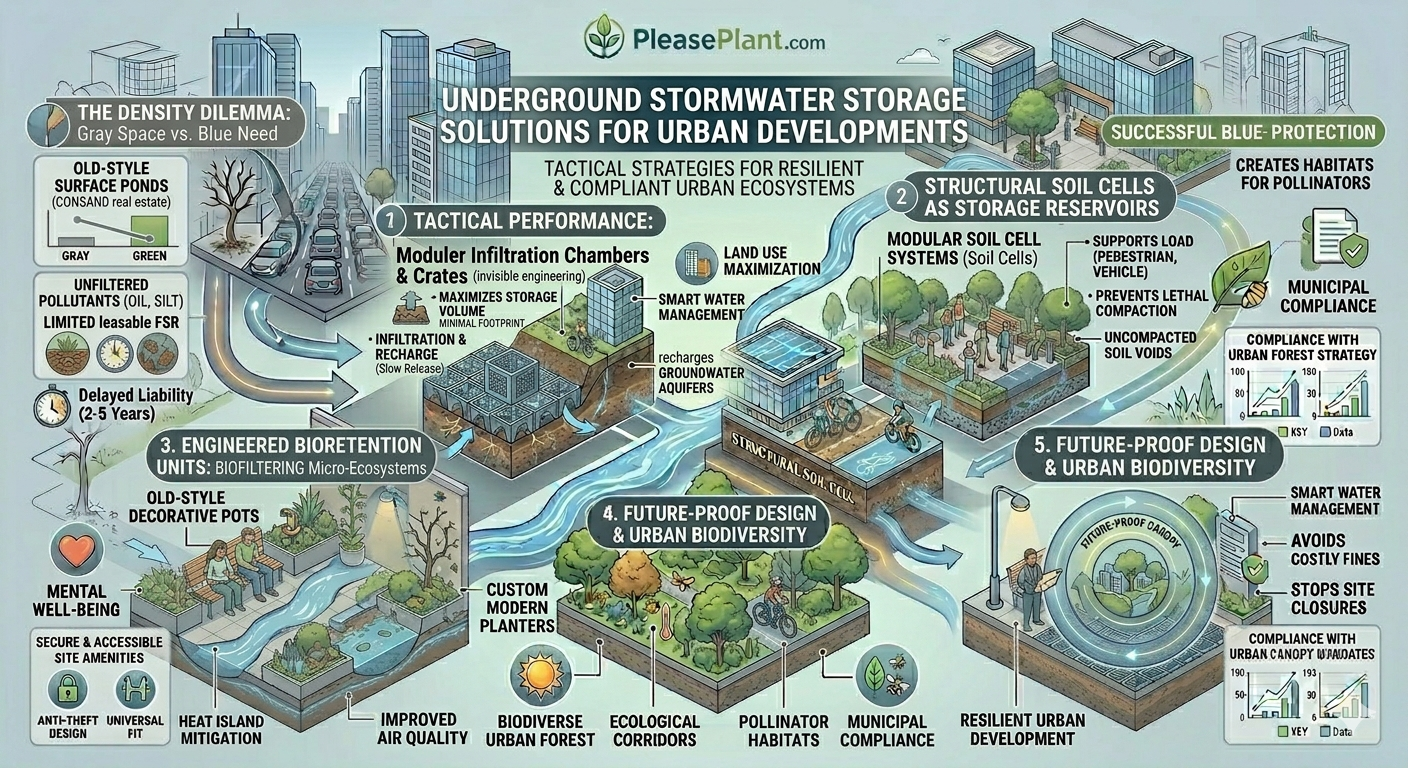
Underground Stormwater Storage Solutions for Urban Developments
If you’ve ever looked at a tight urban site in Surrey or Langley and wondered how on earth the developer managed to fit a high-density building, required parking, and a massive drainage system on the same lot, the answer is likely hiding right beneath your feet. In the high-stakes world of British Columbia real estate, land is far too valuable to lose to an open-air drainage pond. This is why underground stormwater storage has become the gold standard for savvy developers looking to maximize their ROI while staying in the good graces of municipal planners.
Anyone who has worked on a development in the Fraser Valley knows one thing: rain will always win if you ignore it. As we densify our urban cores in Abbotsford and Chilliwack, we are forced to get creative with our underground drainage infrastructure.
The Land-Use Dilemma
The real issue developers face with urban runoff storage is the "math of the footprint." Traditional surface detention ponds are land-hungry; they eat up square footage that could otherwise be used for leasable retail space, extra parking stalls, or lush pedestrian plazas. In the Fraser Valley, where land prices continue to climb, every square meter of surface area counts.
Without a way to move that water storage sub-surface, many projects would simply be unfeasible under current stormwater detention systems requirements.
Why Underground Storage is a Game-Changer
Modern underground stormwater storage solutions allow a site to "work twice." By burying the storage, you can utilize the surface for almost anything—from heavy-duty loading bays to park-like settings.
-
Modular Flexibility: Modern systems use high-strength modular cells that can be configured to fit around existing utility lines or oddly shaped property boundaries.
-
High Efficiency: Unlike rock-filled trenches, these systems offer a massive "void ratio," meaning they can hold more water in a significantly smaller excavated area.
-
Structural Strength: These systems are engineered to support the weight of fire trucks and heavy commercial traffic, making them ideal for placement under parking lots.
The Designer’s Perspective
From a landscape architecture planning perspective, moving the drainage underground is a massive win. It removes the need for fenced-off, unsightly "dry ponds" and allows us to focus on creating beautiful, functional streetscapes that people actually enjoy. It treats urban runoff storage as a hidden utility rather than a design obstacle.
Conclusion
As the Fraser Valley continues its rapid transformation, the ability to manage water without sacrificing land will define the next generation of successful developments. Underground stormwater storage isn't just an engineering choice; it's a smart business decision for any developer building in BC's rainy climate.
To learn how modular underground systems can help you maximize your next project's potential, contact Please Plant.