
The Future of Stormwater Infrastructure in Canadian Cities
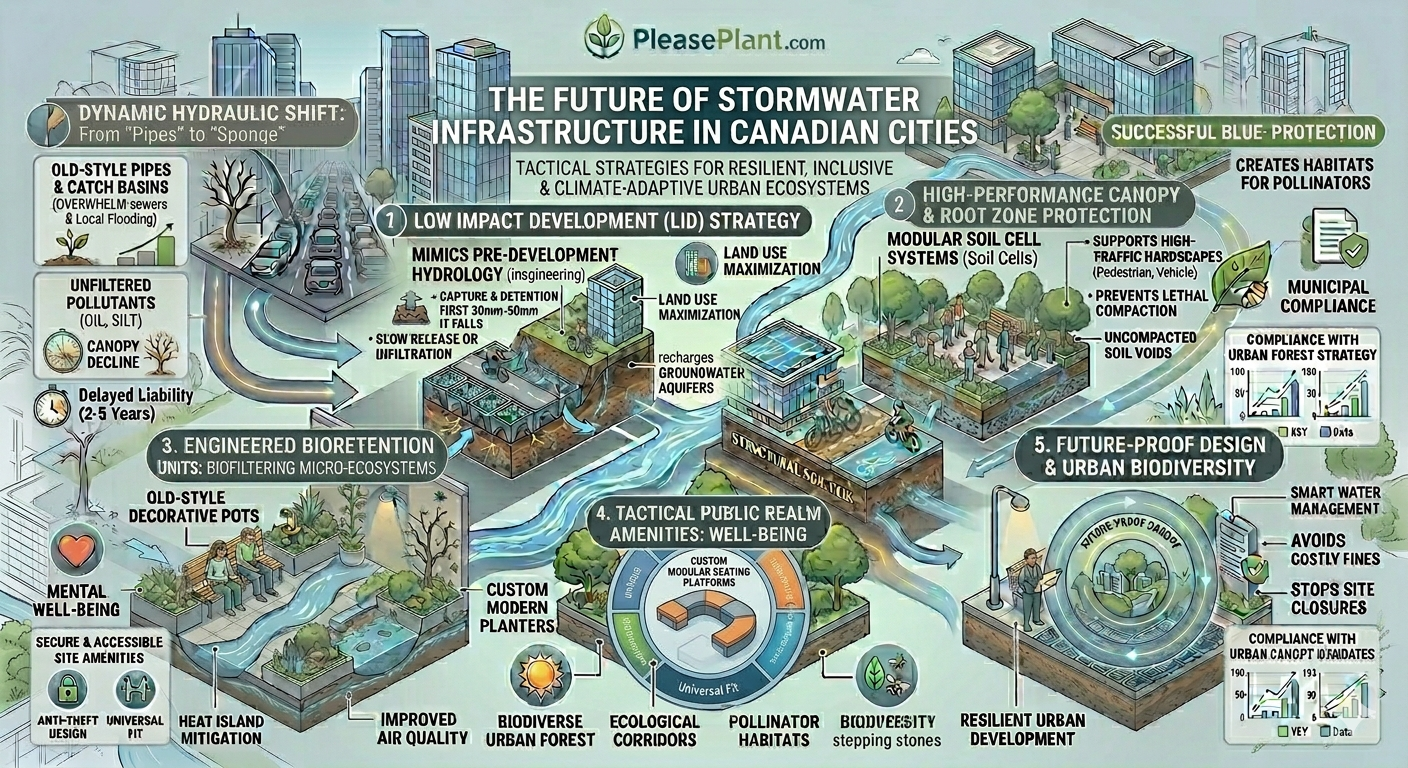
As we move through 2026, the blueprint for stormwater infrastructure Canada is undergoing a radical redesign. Canadian municipalities—from the dense corridors of Surrey and Vancouver to the growing hubs of Abbotsford and Langley—are facing a "new normal" of atmospheric rivers and rapid urbanization. The traditional model of hidden pipes and concrete culverts is giving way to a more sophisticated, decentralized, and nature-integrated approach to urban water management.
Decentralization and Modular Resilience
The most significant trend for 2026 is the shift toward future drainage systems that are modular rather than monolithic. Large-scale, centralized treatment plants are being supplemented by decentralized "mini-hubs."
-
Modular Detention: Instead of massive, single-site reservoirs, developers are implementing distributed networks of underground storage cells.
-
Rapid Deployment: Prefabricated drainage units are allowing cities like Chilliwack to upgrade infrastructure in a fraction of the time required for traditional poured-in-place concrete.
The Rise of "Sponge" Urbanism
Canada’s sustainable infrastructure goals are now being met through "Sponge City" principles. This trend focuses on mimicking natural hydrology to absorb rainfall where it hits the ground.
-
Blue-Green Retrofits: Cities are aggressively retrofitting older neighborhoods with rain gardens, bioswales, and "sponge parks" that double as public amenities.
-
Permeable Public Realms: Modern plazas in Abbotsford and Surrey are increasingly being built with permeable surfaces that filter pollutants and reduce the strain on municipal pipes.
Data-Driven Management and Smart Technology
We are entering the era of "Smart Water." Emerging stormwater infrastructure Canada now incorporates real-time sensors and AI-driven modeling to predict flood events before they happen. This allows for adaptive management—opening and closing gates or valves automatically to optimize storage capacity across a city’s entire network.
Conclusion
The future of Canadian cities depends on our ability to build with water, not just against it. By embracing modular, sustainable, and data-driven solutions, the Fraser Valley can lead the way in creating resilient urban environments that thrive in any weather.
To learn how modular platforms and advanced drainage systems can future-proof your next development, contact Please Plant.