
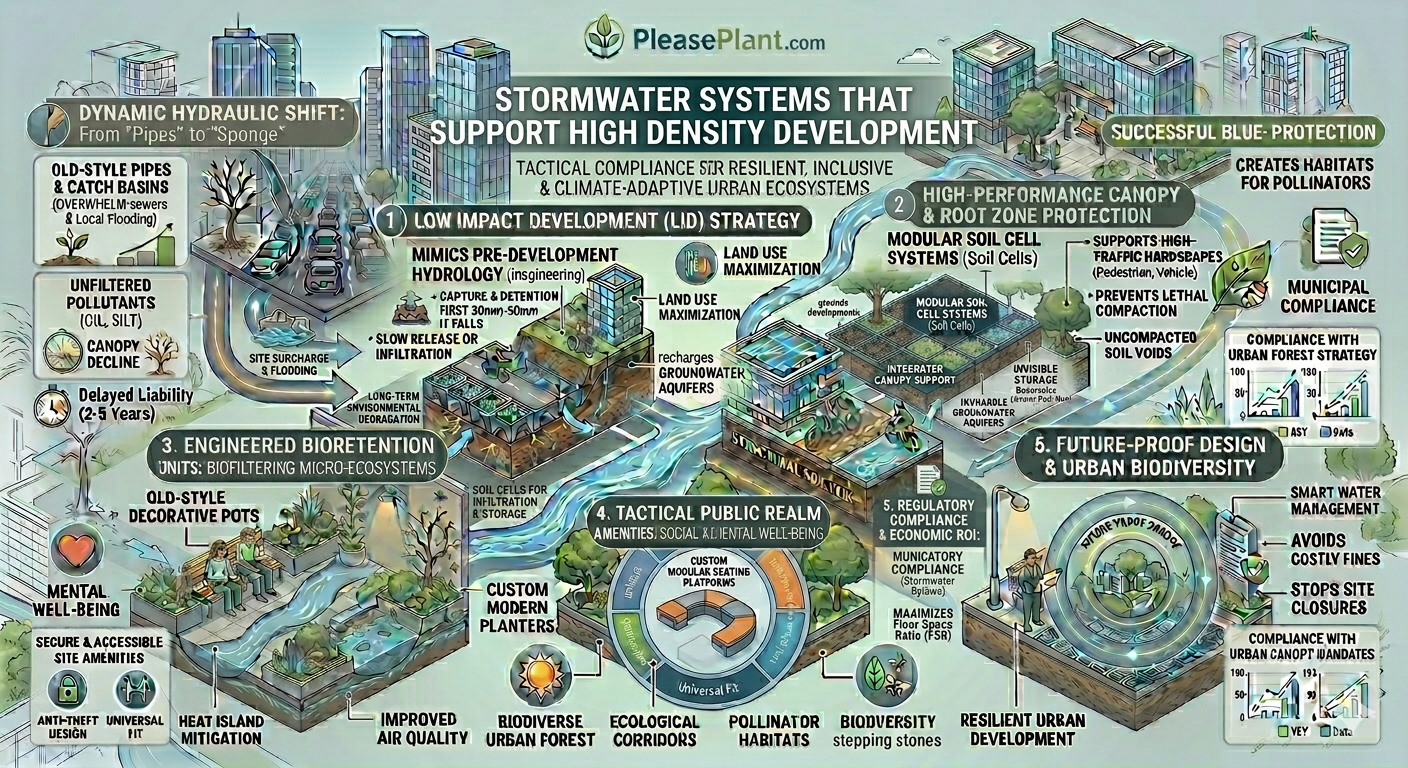
Stormwater Systems That Support High-Density Development
As the skylines of Vancouver, Surrey, and Burnaby continue to reach new heights, the ground
beneath them is facing unprecedented pressure. In high-density developments, where every
square meter is optimized for residential or commercial use, traditional drainage methods—like
large surface ponds—are no longer an option. High-density stormwater systems have become
the silent engine of urban growth, allowing developers to maximize floor area ratio (FAR) while
meeting the rigorous environmental standards of the Fraser Valley.
The Challenge of Modern Density
The core issue with urban runoff management in a high-density context is the lack of
"permeable" space. When a building footprint and its surrounding hardscape cover nearly 100%
of a site, the volume of runoff during a BC rain event is immediate and massive. Without
sophisticated development drainage systems, this surge can overwhelm city water
infrastructure, leading to backups, flooding, and potential structural damage.
Vertical Thinking, Sub-Surface Solutions
To thrive in a dense environment, stormwater management has moved underground. Developers
in Abbotsford and Langley are increasingly turning to modular, high-performance systems that
live beneath the usable site area.
• Modular Underground Detention: High-strength plastic or concrete cells can be stacked
beneath parking garages, fire lanes, or public plazas. These systems hold peak rainfall volumes
and release them into the municipal grid at a controlled, safe rate.
• Blue Roof Technology: In ultra-dense cores, the roof itself becomes a reservoir. Temporary
ponding systems on high-rise rooftops attenuate water at the source, reducing the immediate
load on the ground-level infrastructure.
• Structural Soil and Vaults: By combining urban runoff management with tree-planting systems,
developers can use the "void space" in soil cells to store water, supporting a healthy green
canopy without taking up additional land.
Streamlining the Approval Process
For developers, the ROI of advanced high-density stormwater systems isn't just in land
savings—it’s in the permit office. Municipalities across the Lower Mainland are far more likely
to approve projects that demonstrate "Zero Net Increase" in runoff. By integrating professional
city water infrastructure planning early, developers can avoid the costly redesigns and delays
that often plague sites with complex drainage needs.
The A&D Perspective: Integrating Infrastructure
From an architectural standpoint, the goal is "invisible engineering." We want the public to see a
beautiful plaza or a lush streetscape, not the complex network of tanks and filters beneath them.
Modern systems allow for this seamless integration, ensuring the site is as resilient as it is
functional.
Conclusion
Building high-density doesn't mean building high-risk. By utilizing sub-surface modular
solutions and smart site planning, developers can build the vibrant, dense communities the Fraser
Valley needs while ensuring the water stays exactly where it belongs.
To learn how our modular stormwater cells can help you maximize density on your next project,
contact Please Plant.