
The Scale of the Storm: Planning for Large-Scale Commercial Drainage
If you have ever stood in the middle of a massive shopping center parking lot during a West Coast downpour, you have likely seen the sheer volume of water that a single site can generate. For architects and developers working on office parks, retail hubs, or mixed-use developments, the challenge is clear: when you pave over hectares of land, you create a massive water management responsibility. This is where commercial stormwater systems move from the background of a project to the very forefront of the planning process.
Anyone who has worked on a development in the Fraser Valley knows one thing: rain will always win if you ignore it. As we scale up from single-family homes to massive commercial footprints in Abbotsford, Langley, and Chilliwack, the margin for error in stormwater engineering disappears.
The Commercial Constraint: More Roof, Less Soil
The real issue developers face with development drainage systems in the commercial sector is the ratio of impervious surfaces. Shopping centers and office buildings require expansive rooftops and even larger parking areas. In regions like the Fraser Valley, where rainfall is frequent and intense, these "lids" prevent rainwater from soaking naturally into the ground.
Without a sophisticated site drainage design, this water becomes high-velocity runoff. Unmanaged, it can cause localized flooding, overwhelm municipal infrastructure, and even lead to long-term structural issues for the building’s foundation.
How Engineers Plan for the "Big Box"
Stormwater engineering for large-scale sites is a game of numbers and logistics. Engineers must calculate the peak flow for the entire site, often designing for "once-in-a-century" storm events to ensure the project remains resilient.
-
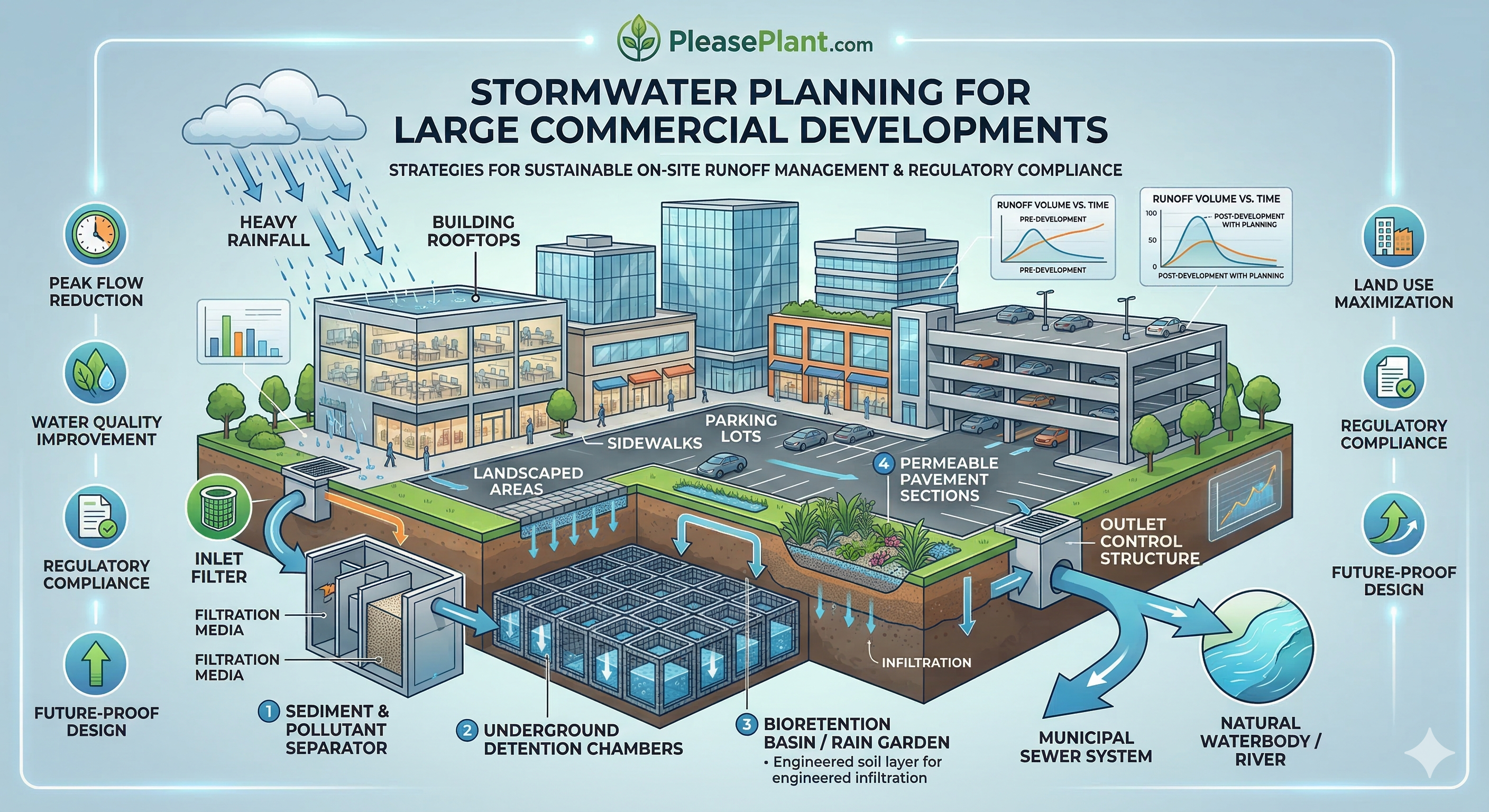
Catchment and Conveyance: The first step is getting the water off the surface. This involves a network of catch basins, trench drains, and underground piping designed to move water away from pedestrian entrances and loading bays.
-
On-Site Detention: Most municipalities in BC, including Surrey and Abbotsford, require that large developments manage water on-site rather than simply dumping it into the city pipes.
-
Quality Control: Commercial runoff often carries oils, heavy metals, and debris from parking lots. Modern commercial stormwater systems often include oil-water separators or filtration units to clean the water before it is released.
Underground vs. Surface Solutions
In the past, a shopping center might have dedicated a large corner of the property to a "stormwater pond". While effective, these ponds eat up valuable leasable land. In today’s high-density market, we are seeing a massive shift toward underground commercial stormwater systems.
By using modular stormwater cells or large-scale detention tanks, developers can hide their development drainage systems beneath the parking lot. This allows for a much more efficient site drainage design that maximizes the building's footprint while meeting all municipal environmental requirements.
The Design Perspective: Integration is Key
For landscape architects and planners, the goal is to make these high-performance systems invisible or, better yet, multifunctional. We look for ways to integrate drainage into the aesthetic of the site—perhaps through permeable pavers in the pedestrian plazas or bio-retention planters that add greenery while filtering runoff.
When stormwater engineering is brought into the conversation during the early stages of site planning, it becomes a design tool rather than a budget-draining afterthought.
Protecting the Asset
At the end of the day, a robust drainage plan is an insurance policy for the developer. It protects the parking surfaces from premature wear, prevents basement flooding in office towers, and ensures the project remains a "good neighbor" to the surrounding community and ecosystems.
As the Fraser Valley continues to grow, the way we plan for water in our commercial hubs will define the sustainability of our cities.
If you are looking to optimize the commercial stormwater systems for your next large-scale project, Please Plant can provide the technical expertise and modular solutions to keep your site dry and your design on track.