
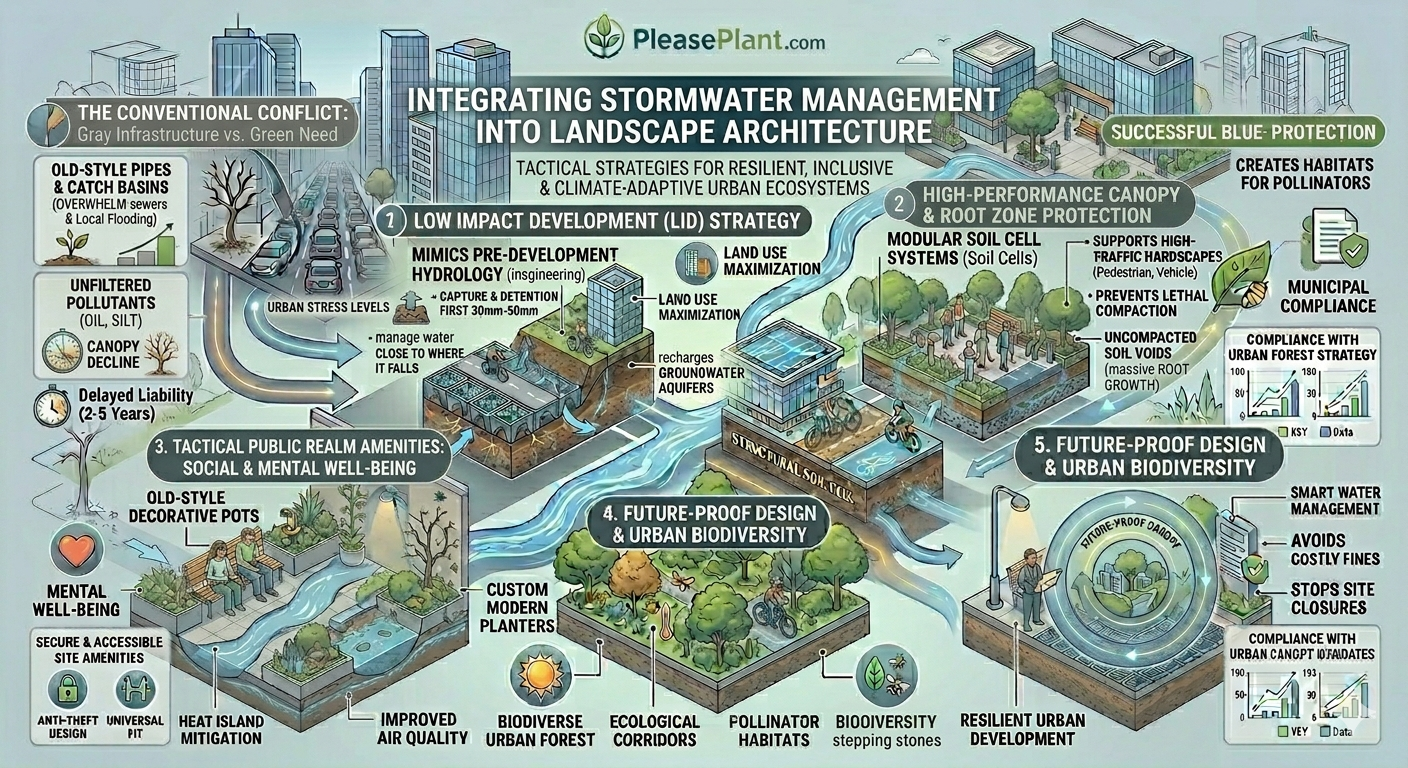
Integrating Stormwater Management Into Landscape Architecture
If you have ever sat through a coordination meeting where the civil engineer and the designer are at odds over the placement of a catch basin, you know the struggle. For a long time, drainage was something to be "hidden" in the civil set, while the landscape was meant to be the "pretty" layer on top. But in the Fraser Valley, where the rain is practically a seasonal personality trait, those days are over. Modern stormwater landscape architecture is about erasing that line and making the infrastructure part of the art.
The Shift Toward Sustainable Landscape Planning
Anyone who has worked on a development in the Fraser Valley knows one thing: rain will always win if you ignore it. As we densify areas like Surrey, Langley, and Abbotsford, we are replacing natural sponges with waterproof lids—roofs, roads, and parking lots. This creates a massive volume of runoff that can overwhelm municipal systems if not managed correctly. Sustainable landscape planning solves this by treating water as a design constraint rather than a nuisance.
How Integrated Drainage Systems Work
Landscape architects are now using integrated drainage systems to balance aesthetics with hard-working functionality. Instead of just piping water away, we incorporate it into the design through:
-
Bioretention Planters: These aren't just for greenery; they are engineered to catch, filter, and absorb runoff directly from the surrounding hardscape.
-
Permeable Paving: This allows water to move through the surface and into a designed base layer, reducing the "slip-and-slide" effect of traditional asphalt.
-
Modular Platforms: Beneath the beautiful stone plazas in Chilliwack, we are hiding modular drainage platforms that store peak rainfall and release it gradually.
The Designer’s Perspective on Landscape Water Management
From a landscape water management perspective, the goal is to make the infrastructure invisible—or better yet, a feature. When we integrate these systems early, they influence everything from site grading to the selection of native plant palettes. It allows us to meet municipal requirements without losing the "A&D" feel that makes a project a destination.
Conclusion
Integrating stormwater management is no longer an optional "extra"; it is the foundation of good city building. By prioritizing stormwater landscape architecture, we create sites that handle water responsibly while supporting long-term urban growth.
To learn how our modular solutions can help bridge the gap between your civil drawings and your landscape vision, contact Please Plant.