
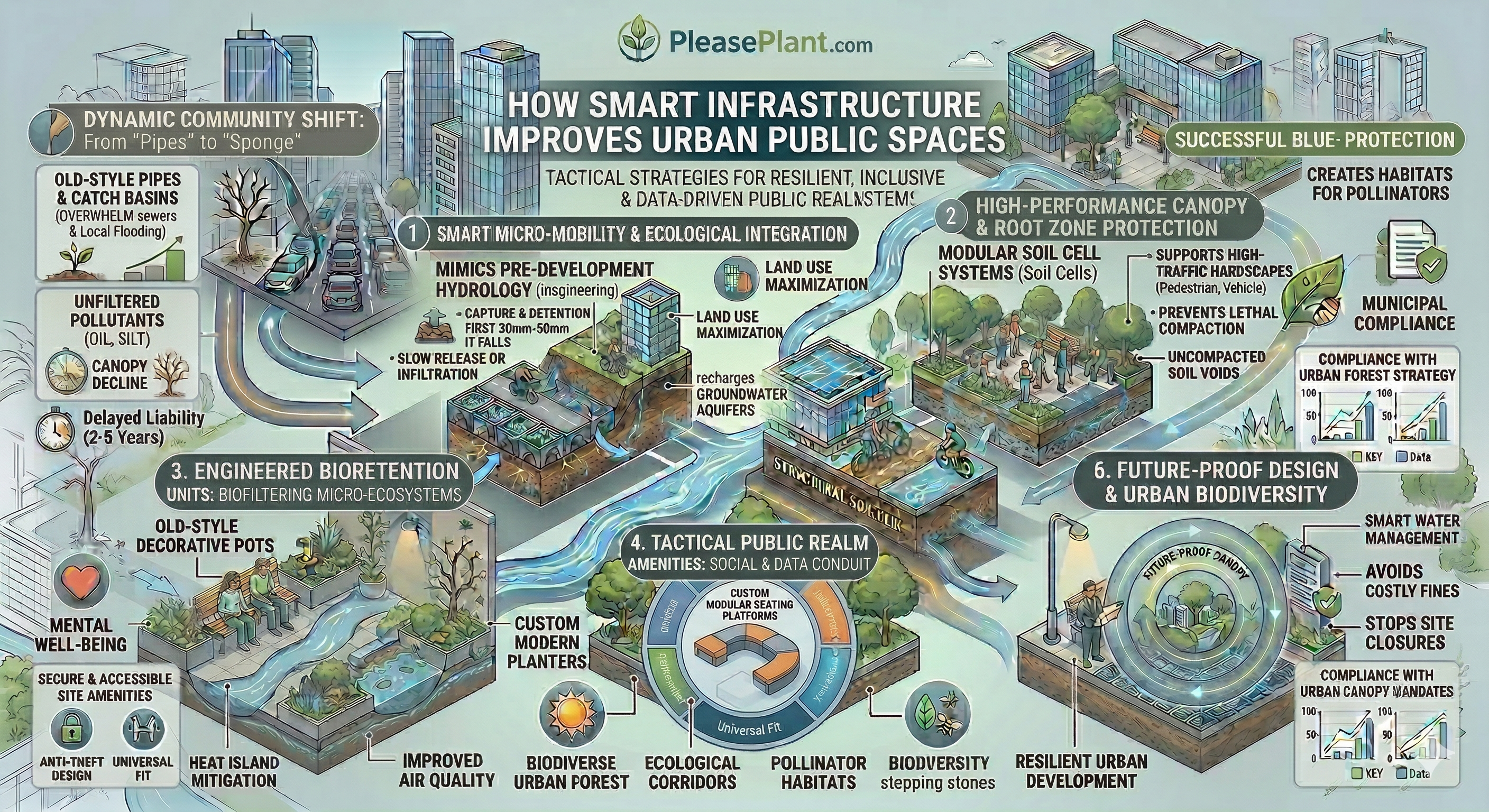
How Smart Infrastructure Improves Urban Public Spaces
In the rapidly evolving cities of Vancouver, Surrey, and Langley, the success of a development is no longer measured solely by the square footage of its interiors. Instead, the focus has shifted to the "connective tissue" between buildings. High-quality public space infrastructure is the foundation of a modern city, transforming empty plazas into vibrant, safe, and accessible community hubs.
Enhancing Safety and Accessibility
Thoughtful urban design infrastructure prioritizes the human experience. In regions like Abbotsford and Chilliwack, we are seeing a move toward "inclusive by design" philosophy. This includes:
-
Strategic Lighting and Furnishings: Integrated lighting in benches and pathways increases perceived safety after dark.
-
Universal Access: Seamless transitions between hardscapes and green spaces ensure that public areas are navigable for all mobility levels.
-
Wayfinding and Boundaries: Using public landscape systems like architectural planters to naturally guide foot traffic and separate pedestrians from vehicle corridors.
Building for Long-Term Sustainability
Anyone who has worked on a development in the Fraser Valley knows one thing: rain will always win if you ignore it. Smart infrastructure is inherently sustainable infrastructure. By integrating city planning design with environmental engineering, we create spaces that:
-
Manage Stormwater: Utilizing permeable surfaces and modular underground storage to prevent localized flooding and erosion.
-
Mitigate Heat: Incorporating tree canopies and structural soil systems that lower urban temperatures during BC’s increasingly hot summers.
-
Reduce Maintenance: Selecting high-performance materials like aluminum and sustainable hardwoods that withstand the Pacific Northwest's humidity.
The Architect’s Perspective: Multi-Functional Design
From an A&D standpoint, the goal is to make every piece of infrastructure "work twice." A bench isn't just a place to sit; it’s a barrier for traffic. A planter isn't just for greenery; it’s a stormwater bio-filter. When we treat public space infrastructure as a versatile toolkit, we create urban environments that are resilient and enduring.
Conclusion
The future of the Fraser Valley lies in the quality of our shared spaces. By investing in smart, durable, and thoughtful infrastructure today, we ensure our cities remain livable for generations to come.
To discover how our modular site furnishings and drainage platforms can elevate your next public space project, contact Please Plant.