
How Permeable Paving Helps Reduce Flooding in Urban Areas
There’s a moment that happens on almost every project in the Fraser Valley.
It usually occurs during a rainy site visit.
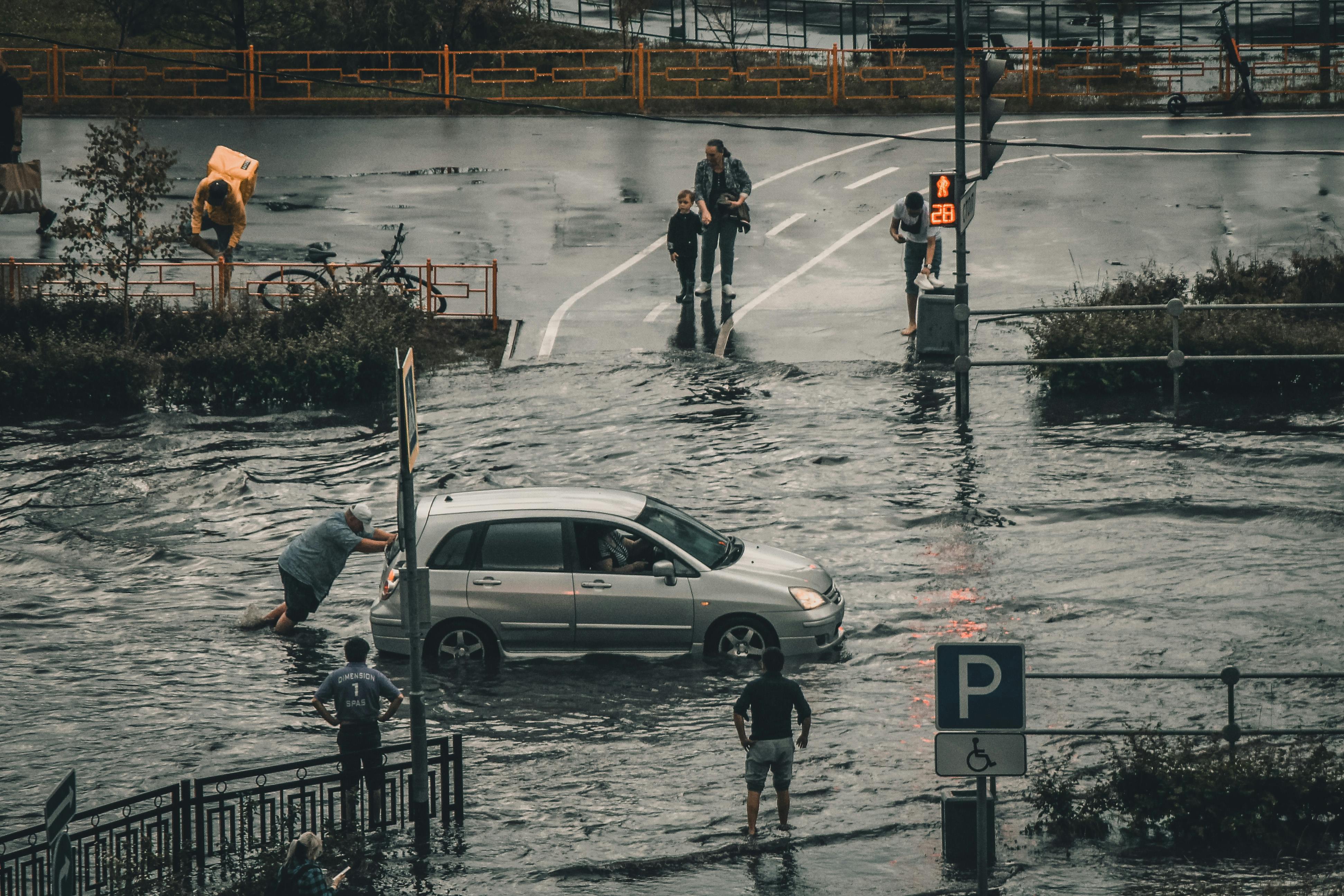
Someone looks at the parking lot. Someone else looks at the storm drain. Then everyone collectively watches the water rushing across the pavement like it’s trying to escape the project entirely.
At that moment, the civil engineer quietly says something about drainage capacity, and everyone suddenly remembers why permeable paving systems exist.
Because the truth is, most modern development surfaces are terrible at handling water.
The Problem With Traditional Pavement
Standard asphalt and concrete are basically waterproof lids placed on top of the ground.
Rain hits the surface and immediately becomes runoff. It moves quickly across the site until it finds the nearest drain.
Multiply that by thousands of square meters of pavement in places like Abbotsford, Langley, or
Surrey, and you start to see why stormwater infiltration systems have become a bigger part of urban design conversations.
The water has nowhere to go except into already stressed municipal drainage systems.
And during heavy rainfall events—which BC seems to specialize in—that can create problems.
What Permeable Paving Systems Actually Do
Permeable paving systems solve the problem in a surprisingly simple way.
Instead of forcing water to run across the surface, they allow it to move through the pavement and into a specially designed base layer below.
From there, water can:
• slowly infiltrate into surrounding soil
• move through controlled drainage layers
• connect to larger urban drainage systems if needed
The result is less surface runoff and more balanced stormwater management.
For planners and engineers working across the Fraser Valley, that’s a big deal.
Why Cities in BC Are Paying Attention
Municipalities throughout BC are increasingly encouraging the use of permeable pavers as part
of broader stormwater management strategies.
You’ll see them integrated into projects across the region in places like:
• pedestrian plazas
• parking areas
• mixed-use developments
• courtyards and public spaces
They reduce pressure on stormwater systems in BC, help developments meet municipal regulations, and create surfaces that behave a little more like natural ground.
Which, when you think about it, was the whole idea in the first place.
Letting the Ground Do Some of the Work
Designing cities often means solving problems created by development itself. Water runoff is one of the clearest examples.
Permeable paving doesn’t eliminate rain (if only). But it does help urban sites handle water in a way that feels a lot closer to how landscapes worked before we paved over them.
And in a region like the Fraser Valley—where rain is less of a surprise and more of a seasonal personality trait—that kind of infrastructure quietly makes a big difference.
Sometimes the smartest stormwater management solution isn’t a bigger pipe.
It’s simply giving water somewhere better to go.