
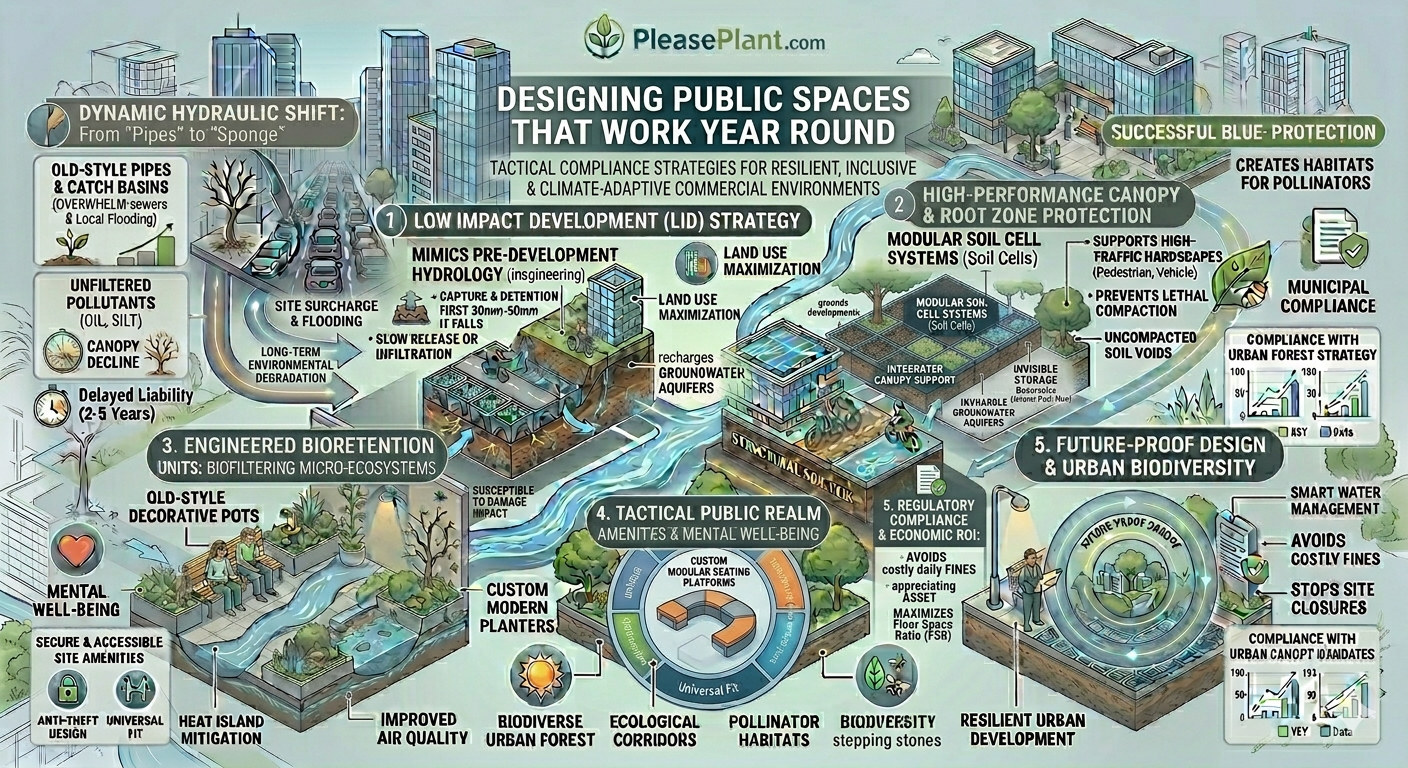
Designing Public Spaces That Work Year-Round
In cities like Vancouver and Abbotsford, public spaces face a unique challenge: they must be as
inviting during a grey, misty November afternoon as they are during a peak July heatwave.
Creating a "four-season" plaza requires more than just open space; it requires a strategic
approach to public space design Vancouver that utilizes infrastructure to mitigate the elements
and provide constant utility.
The Role of Urban Furniture in Climate Comfort
The difference between a deserted concrete square and a thriving community hub often comes
down to urban furniture design. In the Pacific Northwest, "comfort" is a technical requirement.
• Thermal Materials: Selecting site furnishings made from materials like sustainably sourced
wood or thermally modified timber ensures that seating remains comfortable to the touch,
avoiding the bone-chilling cold of bare metal in the winter.
• Strategic Placement: Grouping benches and seating under overhangs or integrated glass
canopies allows public spaces to remain functional even when the drizzle sets in.
Planters as Microclimate Anchors
Architectural planters are the workhorses of public plaza infrastructure. Beyond their aesthetic
appeal, they serve functional roles that change with the seasons:
• Wind Buffering: Large-scale planters can act as windbreaks, shielding pedestrians from the
biting drafts common in downtown corridors.
• Permeable Drainage: Modern planter systems can be designed to capture and filter rainwater,
preventing the localized ponding that often makes urban plazas unusable during the rainy
season.
• Greenery and Wellbeing: In the depths of a grey BC winter, the evergreen structural planting
housed in high-quality commercial planters provides a vital psychological lift and visual interest.
Accessibility and Inclusivity
True public space design Vancouver ensures that infrastructure is usable for everyone, 365
days a year. This means incorporating high-visibility edges on furniture for low-light winter days
and ensuring that site furnishings are placed to allow for easy snow removal or leaf clearing,
maintaining clear paths of travel for those with mobility challenges.
The Designer’s Perspective: Multi-Functional Infrastructure
From an A&D standpoint, the goal is to create "sticky" spaces—places where people want to
linger. By integrating heating elements into seating or choosing planters that double as security
bollards, we maximize the ROI of the public plaza infrastructure. It is about building a space
that adapts to the community’s needs, regardless of the forecast.
Conclusion
A successful public space is one that doesn't shut down when the sun goes behind the clouds. By
choosing robust, thoughtful, and climate-appropriate infrastructure, developers can create year-
round destinations that enhance the vibrancy of the Fraser Valley.
To explore our range of weather-resilient site furnishings and architectural planters, contact
Please Plant.