
The Parking Pivot: Why the Humble Bike Rack is the Key to Modern Urban Mobility
If you’ve tried to find a spot for your e-bike outside a coffee shop in Kitsilano or near a new development in Surrey lately, you’ve realized that the demand for high-quality bike racks in Vancouver has officially hit a fever pitch. We are no longer in the era where a single, lonely "U-rack" bolted to a sidewalk constitutes a mobility plan. In the A&D community, we’re seeing a fundamental shift: bicycle storage has moved from a basement afterthought to a front-and-center architectural statement.
Anyone who has worked on a development in the Fraser Valley knows one thing: rain will always win if you ignore it. But the second thing we’re learning is that if you don't design for the "cycling revolution," your project will feel dated before the first tenant moves in. As we densify our urban cores from Langley to Abbotsford, urban bicycle infrastructure is becoming a primary metric for a project’s "walkability" and overall market appeal.
The Shift: From "Alternative" to Essential
The real issue developers and municipal planners face is the rapid evolution of how people move. With the explosion of e-bikes and cargo bikes, the standard bike rack just doesn't cut it anymore. These bikes are heavier, more expensive, and often larger than the road bikes of a decade ago.
Without robust public bike parking, we create a friction point in our cities. If a resident in Langley or a commuter in Vancouver doesn't feel their bike is secure and accessible, they’ll simply take the car. This puts more pressure on our already stressed roads and parking infrastructure. By investing in better bike racks in Vancouver, we are quite literally clearing the way for a more efficient city.
Designing for Security and Style
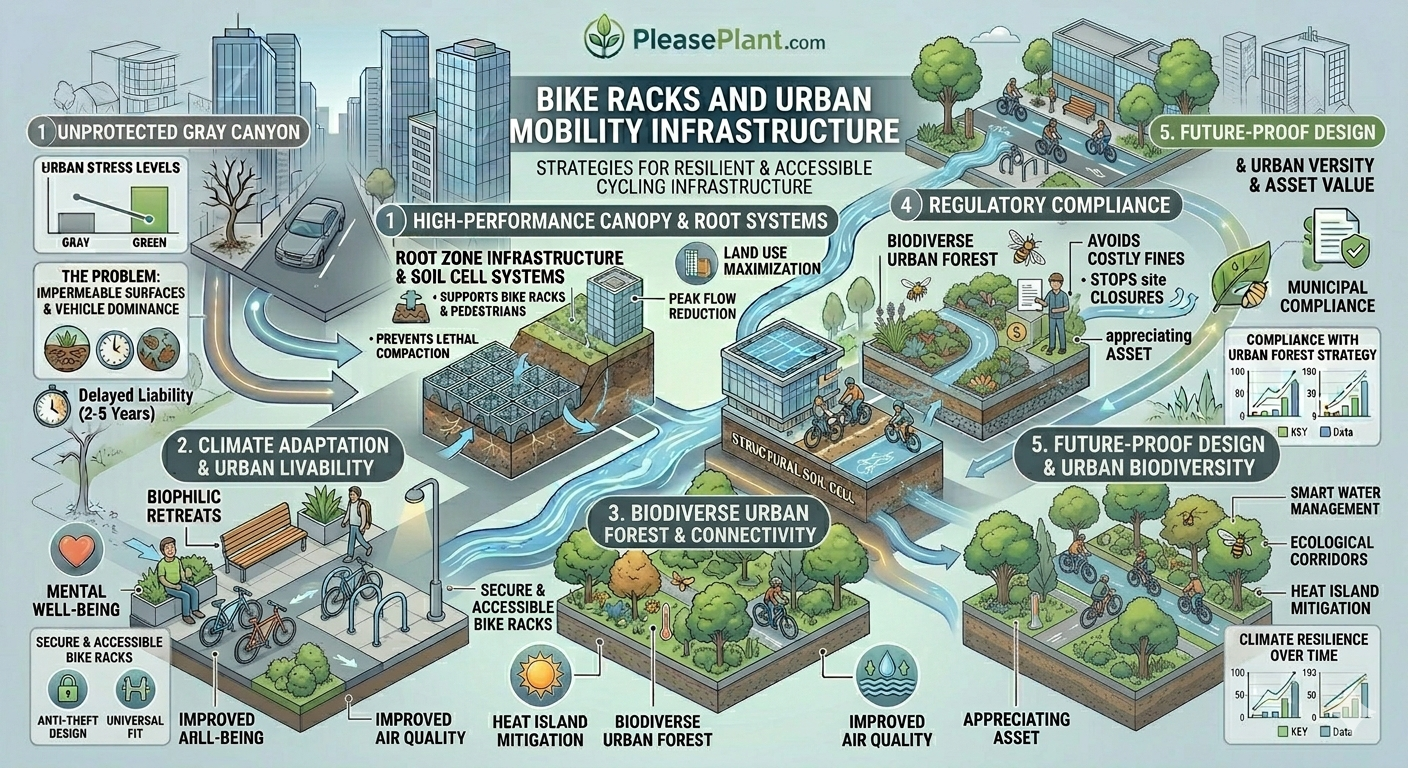
In modern city planning, urban bicycle infrastructure is being integrated into the very aesthetic of the streetscape. We are seeing a move toward:
-
High-Security Standards: Moving beyond simple loops to heavy-duty, tamper-resistant materials that can withstand the rigors of a high-density urban environment.
-
Increased Footprints: Designing parking areas that accommodate the wider wheelbases of cargo bikes and the weight of e-bikes.
-
Integrated Lighting and Cover: Recognizing that for a bike rack to be truly "usable" in BC, it needs to be visible at 5:00 PM in November and, ideally, offer some reprieve from the rain.
The Designer’s Perspective: More Than Metal
From a landscape architecture and planning perspective, public bike parking is a powerful tool for activating the public realm. A row of well-designed bike racks can act as a buffer between a sidewalk cafe and a busy road, or as a sculptural element in a transit plaza.
In cities like Vancouver and Burnaby, where "active transportation" is a core pillar of the official community plan, these elements are no longer optional "add-ons." They are a requirement for municipal compliance and a signal to the community that the development supports a sustainable, low-carbon lifestyle.
Building for the 15-Minute City
Ultimately, the goal of urban bicycle infrastructure is to support the "15-minute city" model—where everything you need is within a short ride or walk. By choosing the right bike racks in Vancouver, we are building a more inclusive, accessible, and vibrant urban fabric.
Whether you are planning a transit-oriented development in Surrey or a retail hub in Abbotsford, the way you handle two-wheeled traffic matters. At Please Plant, we provide the site furnishings and infrastructure solutions that make your project a leader in modern urban mobility.