
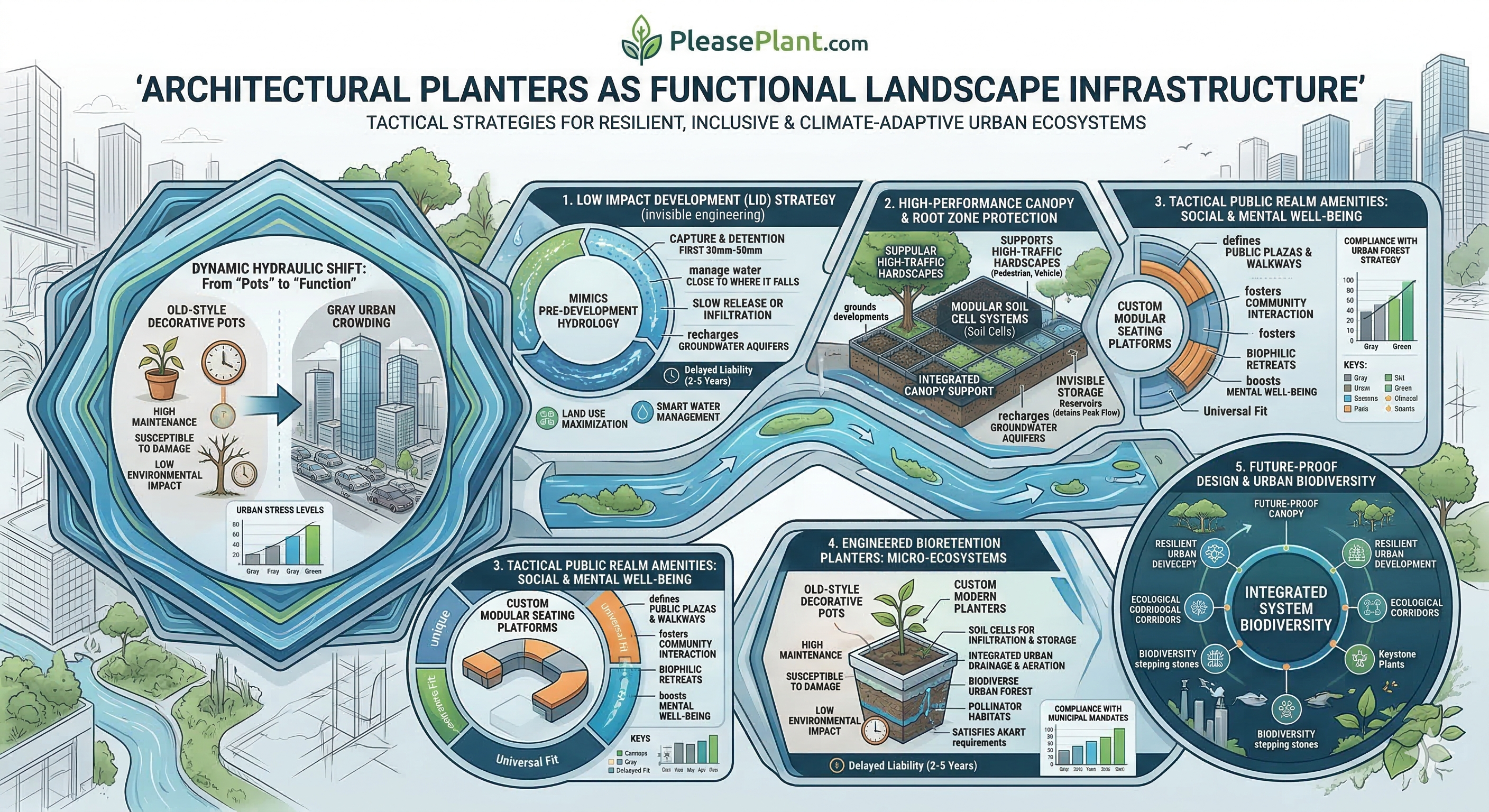
Architectural Planters as Functional Landscape Infrastructure
In the high-density developments of Vancouver, Surrey, and Langley, every square meter of a site is expected to perform multiple roles. We have moved past the era where a pot was simply a decorative accent. In modern architectural landscape design, the humble planter has evolved into a sophisticated piece of "hard-working" infrastructure. Commercial landscape planters are now essential tools for managing human behavior, improving site safety, and introducing nature into the complex urban fabric of the Fraser Valley.
More Than Just a Pretty Face: The Functional Shift
The real issue developers and planners face in growing hubs like Abbotsford and Chilliwack is the need to organize dense, multi-use spaces without creating sterile environments. Urban planter systems provide a versatile solution by serving several critical functions simultaneously:
-
Traffic and Crowd Control: Strategically placed, heavy-duty public space planters act as natural "soft" bollards. They protect pedestrian zones from vehicle encroachment and guide foot traffic without the aggressive look of industrial fencing.
-
Space Definition: In large plazas or mixed-use commercial sites, planters function as living walls. They carve out intimate "outdoor rooms" for dining or working, providing psychological privacy in a busy city center.
-
Environmental Resilience: Beyond aesthetics, large-scale planters help mitigate the "urban heat island" effect and can be integrated into broader stormwater strategies to catch and filter surface runoff.
Designing for the Fraser Valley Climate
Anyone who has worked on a development in the Fraser Valley knows one thing: rain will always win if you ignore it. This applies to planters as well. High-quality commercial landscape planters must be engineered with internal drainage systems that handle our intense seasonal rainfall without clogging or damaging the surrounding hardscape.
The Designer’s Perspective: Integrating Greenery Anywhere
From a landscape architecture planning perspective, the beauty of these systems is their ability to bring lush greenery to places where in-ground planting is impossible—such as on top of parking garages or over utility-dense sidewalks. By utilizing lightweight yet durable materials like powder-coated aluminum or fiberglass, we can achieve massive visual impact without exceeding the structural load limits of the building.
Conclusion
Architectural planters are the workhorses of the modern public realm. By viewing them as a core part of your urban planter systems, you create spaces that are safer, better organized, and significantly more inviting.
To find the right high-performance planter solutions for your next commercial project, contact Please Plant.