
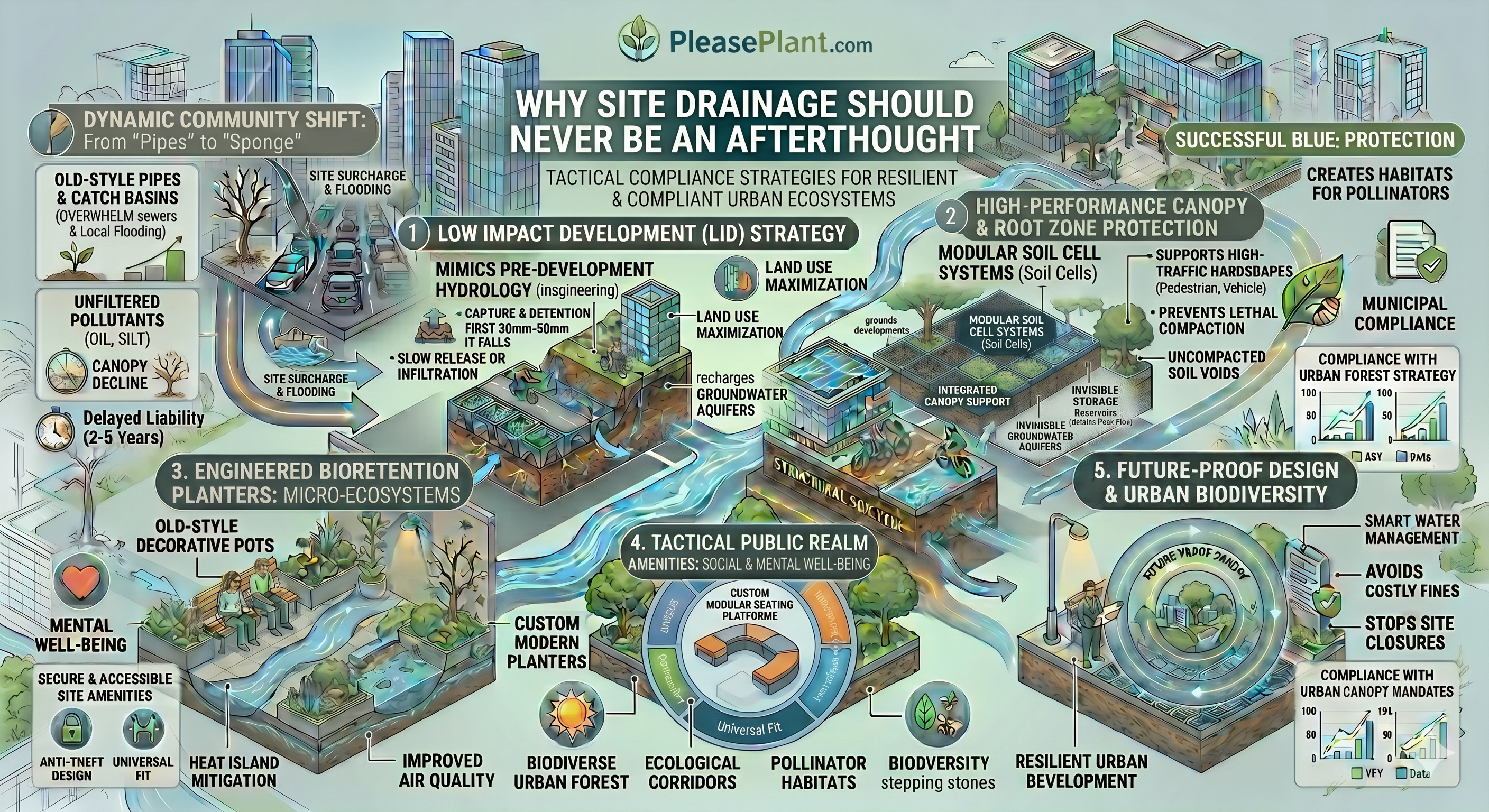
Why Site Drainage Should Never Be an Afterthought
In the high-stakes world of British Columbia real estate, the most expensive mistakes are often
the ones buried underground. Whether you are developing a commercial hub in Surrey, a multi-
family complex in Langley, or a retail plaza in Abbotsford, treating water management as a
"final detail" is a recipe for budget overruns. Professional site drainage planning is the
foundation of a viable project; when it is ignored during the initial design phase, the physical and
financial consequences can be staggering.
The Hidden Costs of Late-Stage Redesign
The real issue developers face in the Fraser Valley is that municipal requirements for
development drainage systems have become significantly more stringent. If you wait until the
architectural drawings are finalized to start the stormwater design process, you may find that:
• Footprints Must Shrink: You might be forced to move building foundations or reduce leasable
square footage to accommodate unplanned detention tanks.
• Parking is Sacrificed: Valuable parking stalls may be lost to surface-level dry ponds that weren't
accounted for in the preliminary site plan.
• Permit Delays: Municipalities like Chilliwack and Vancouver will often reject or delay
applications that do not demonstrate a proactive approach to urban drainage infrastructure.
Preventing On-Site Disasters
Beyond the paperwork, poor site drainage planning leads to physical failures that are incredibly
costly to remediate once the concrete is poured. Without early integration, projects often suffer
from:
• Hydrostatic Pressure: Water pooling against foundations, leading to leaks and structural
instability.
• Hardscape Erosion: Under-engineered drainage causing sidewalks to buckle and parking lots to
crack.
• Landscape Failure: Tree pits and garden beds turning into stagnant ponds, killing off expensive
plantings.
The Benefit of Early Integration
By involving drainage specialists during the "napkin sketch" phase, developers can utilize
modern, space-saving solutions. Urban drainage infrastructure like modular underground
storage cells can be tucked beneath parking lots or fire access lanes. This allows the site to meet
100% of its stormwater requirements without losing a single square meter of buildable land.
Conclusion
In the Fraser Valley, rain is a certainty, not a variable. Early site drainage planning turns a
potential liability into a high-performance asset, ensuring your project remains on schedule, on
budget, and resilient for decades.
To learn how our modular drainage platforms can be integrated into your next site plan to
maximize land use, contact Please Plant.