
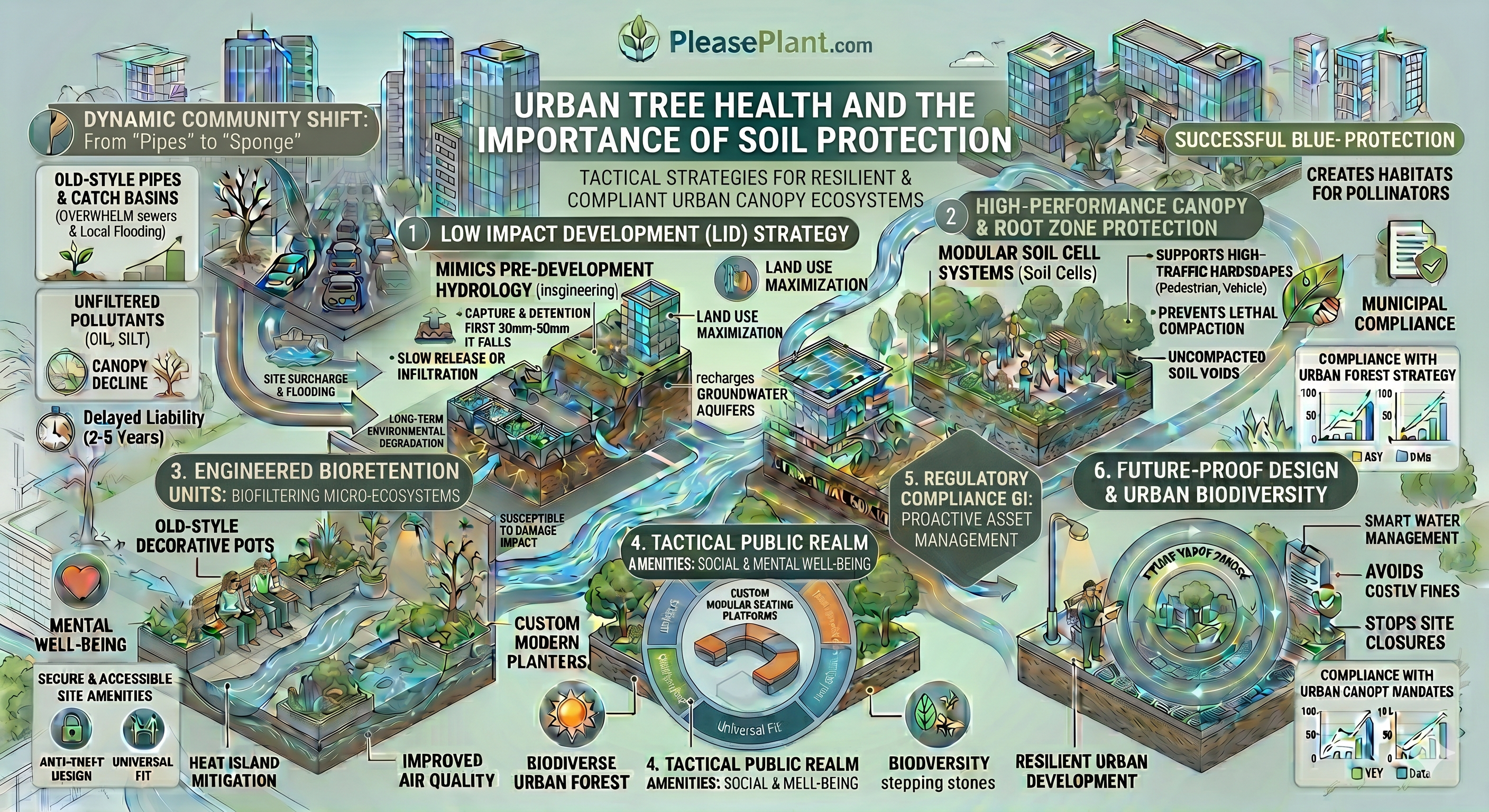
Urban Tree Health and the Importance of Soil Protection
In the rapidly growing urban centers of Vancouver, Surrey, and Langley, we often see a
frustrating cycle: a beautiful new development is completed with a row of vibrant young trees,
only for those same trees to struggle or fail within five years. The culprit is rarely the tree itself,
but rather the invisible battle happening beneath the pavement. For developers and city planners,
the challenge is clear: how do we integrate a flourishing natural canopy into the rigid
requirements of tree root infrastructure?
The "Pavement vs. Roots" Conflict
The primary issue in urban landscape planning is soil compaction. To support the weight of
sidewalks, roads, and emergency vehicles, the ground must be packed incredibly tight. While
this creates a stable surface for humans, it creates a "biological desert" for trees.
Compact soil lacks the pore space necessary for oxygen and water to reach the roots. When roots
can’t breathe, they do one of two things: they either die, leading to a stunted and hazardous tree,
or they push upward in a desperate search for air, causing the costly buckling of sidewalks and
damage to underground utilities.
The Science of Structural Soil Solutions
This is where urban tree protection systems have evolved from simple fences to sophisticated
engineering. Structural soil systems—such as modular soil cells or specialized stone-soil mixes—are designed to hold the structural load of the city while leaving the soil inside loose and
aerated.
• Load Support: The system's rigid frame bears the weight of traffic and pedestrians, preventing
the soil from being squeezed shut.
• Root Expansion: Inside the system, roots have the "void space" they need to grow deep and
wide. This creates a stable anchor for the tree, making it much more resilient during BC’s
windstorms.
• Nutrient Access: These systems allow for the natural filtration of rainwater, providing trees with
a consistent supply of nutrients while simultaneously acting as part of the site’s stormwater
management plan.
A Strategic Investment for Developers
From a development perspective, investing in high-quality urban tree protection systems is a
long-term play. Trees that reach maturity can increase property values by up to 15% and
significantly reduce energy costs by shading buildings. By providing the right foundation today,
you avoid the future costs of sidewalk repairs and tree replacements in Abbotsford or
Chilliwack.
Conclusion
A city that grows upward must also allow its roots to grow downward. By prioritizing structural
soil systems, we bridge the gap between durable urban infrastructure and the thriving green
canopy that makes our communities livable.
To learn more about how our modular soil and tree protection solutions can support your next
project, contact Please Plant.