
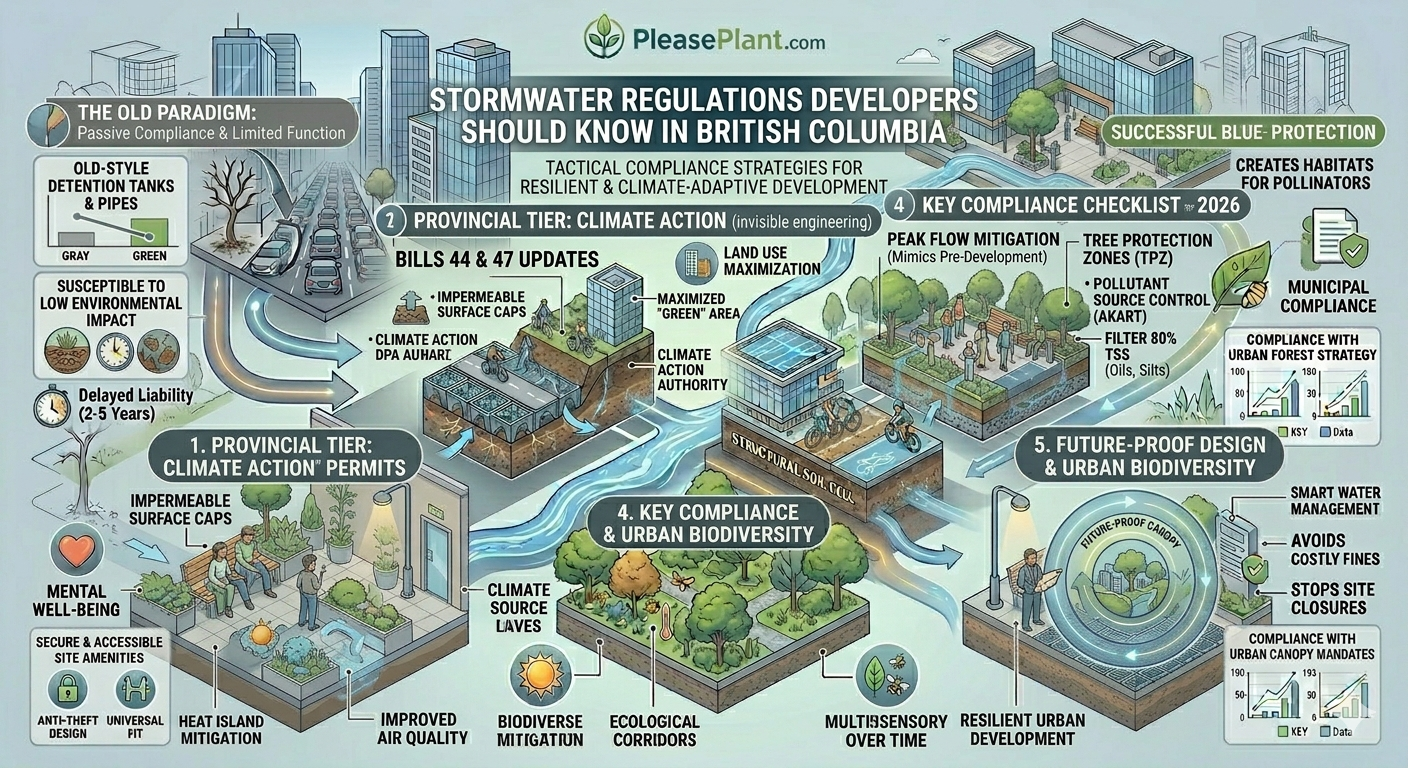
Stormwater Regulations Developers Should Know in British Columbia
Navigating the permitting process for a new project in Surrey, Langley, or Abbotsford often feels like a masterclass in bureaucracy, but few areas are as strictly scrutinized today as stormwater regulations BC. As British Columbia faces more frequent and intense rainfall events, municipalities have shifted from viewing drainage as a simple utility to treating it as a critical environmental safeguard. For developers, understanding these evolving standards isn't just about being a good neighbor—it is essential for securing timely project approvals.
The Shift Toward On-Site Management
The core of modern municipal drainage requirements across the Fraser Valley is the mandate that developments must manage rainwater on-site rather than simply piping it into city systems. Most site development regulations now require that post-development runoff rates do not exceed pre-development levels. This means if you are replacing a permeable field in Chilliwack with a warehouse, you are responsible for catching and "slowing down" the water that would have naturally soaked into the ground.
Why Early Planning is Non-Negotiable
Achieving stormwater compliance BC is significantly more difficult—and expensive—when treated as an afterthought. Early integration in the design phase is vital for several reasons:
-
Site Layout Optimization: Identifying space for detention tanks or rain gardens early prevents the loss of leasable land or parking stalls later in the game.
-
Cost Predictability: Civil engineering costs can balloon if the site needs a major redesign to meet municipal drainage requirements mid-stream.
-
Streamlined Approvals: Municipal planners are far more likely to greenlight projects that demonstrate a proactive approach to stormwater regulations BC from the first submission.
Conclusion
In the current BC development climate, water management is a cornerstone of the planning process. By prioritizing these regulations early, developers can avoid construction headaches and build more resilient communities across the Fraser Valley.
To ensure your next project meets all provincial and municipal standards with innovative modular solutions, contact Please Plant.