
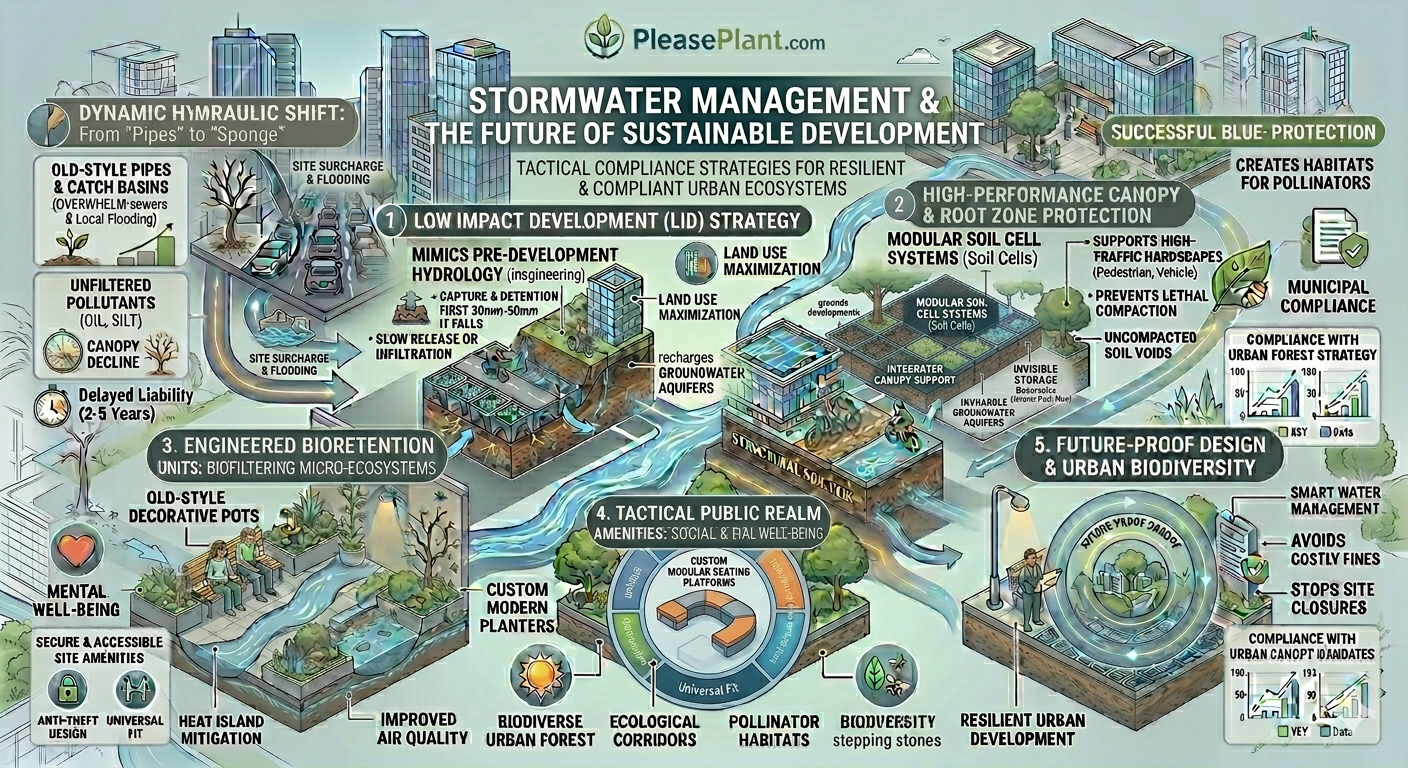
Stormwater Management and the Future of Sustainable Development
As we look toward the future of construction in the Fraser Valley, the definition of a "successful
development" has shifted. It is no longer enough for a building to be aesthetically pleasing or
structurally sound; it must now be hydrologically responsible. In cities like Surrey, Abbotsford,
and Langley, sustainable stormwater management has become the cornerstone of
environmentally conscious design, bridging the gap between urban density and ecosystem health.
Moving Beyond the Pipe: The Green Infrastructure Shift
For decades, the standard approach to drainage was "collect and eject"—moving water off-site as
fast as possible through concrete pipes. However, as climate patterns shift and urban density
increases, this method is no longer viable. Modern green infrastructure drainage aims to
mimic the natural water cycle, treating rainwater as a resource to be harvested and filtered rather
than a waste product to be discarded.
How Site Water Management Supports Sustainability
Effective site water management contributes to the broader goals of sustainable development in
several critical ways:
• Mitigating the Urban Heat Island Effect: By integrating rain gardens and bioswales into urban
sustainability systems, we introduce vegetation that cools the surrounding air through
evapotranspiration.
• Protecting Local Waterways: Sustainable systems filter pollutants—such as oils, heavy metals,
and silt—before they reach the sensitive salmon-bearing streams of Chilliwack and the Fraser
River.
• Recharging Groundwater: Instead of sending runoff into the ocean, infiltration systems allow
water to soak back into the earth, maintaining the local water table even during dry summer
months.
The Developer’s Competitive Advantage
For developers, sustainable stormwater management is more than just an environmental
"win." It is a strategic advantage that streamlines the municipal approval process. B.C.
municipalities are increasingly favoring projects that demonstrate "Low Impact Development"
(LID) principles. By utilizing modular underground storage and permeable hardscapes,
developers can meet these strict requirements while maximizing the usable area of their site.
The A&D Perspective: Designing for Resilience
From an architectural and design standpoint, the goal is to make these systems invisible or, better
yet, a feature of the landscape. When we integrate drainage into the initial site plan, we create
resilient environments that can handle the extreme "atmospheric rivers" of the West Coast while
providing lush, green public spaces for the community.
Conclusion
The future of development in British Columbia is one where the built environment lives in
harmony with the natural water cycle. By embracing sustainable stormwater management, we
aren't just building better properties; we are building more resilient cities.
To see how our modular drainage and soil systems can support your next sustainable
development project, contact Please Plant.