
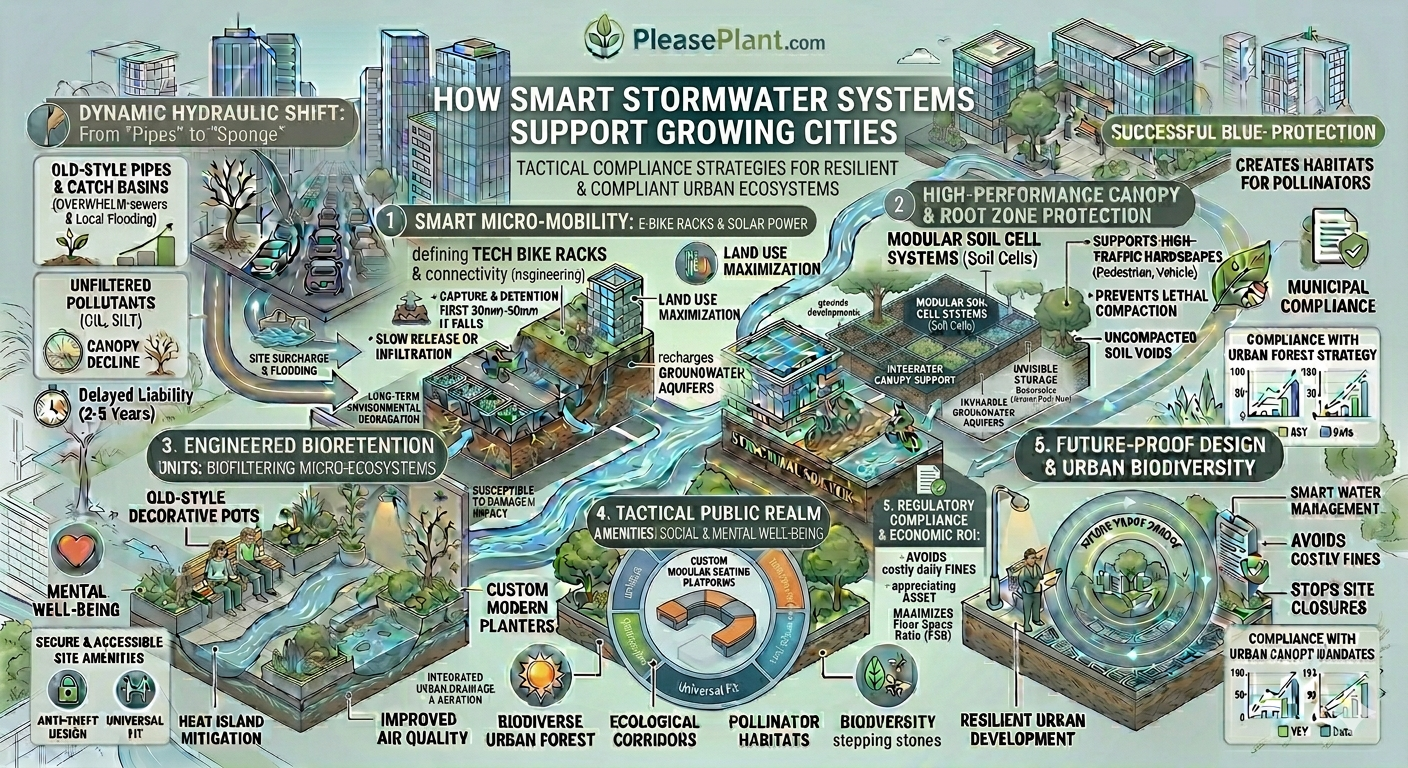
How Smart Stormwater Systems Support Growing Cities
As cities across the Fraser Valley—from the booming tech corridors of Surrey to the expanding
residential hubs of Abbotsford—continue to grow, our traditional infrastructure is reaching its
limit. Rapid urbanization creates a "concrete jungle" effect that prevents rain from soaking into
the ground, turning every drizzle into a potential flood. To combat this, smart stormwater
systems are moving beyond simple pipes and basins, becoming the high-tech foundation for the
next generation of BC developments.
The Problem with Traditional Growth
The real issue developers and municipalities face is that as density goes up, the space for
traditional urban water management goes down. We can no longer afford to set aside prime
acreage for massive open-air detention ponds. Furthermore, our historical stormwater systems
BC were designed for the weather patterns of the past, not the high-intensity "atmospheric
rivers" we now face regularly in 2026.
What Makes a System "Smart"?
In the world of sustainable drainage infrastructure, being "smart" means being proactive
rather than reactive. Modern systems utilize a combination of modular engineering and data-
driven design to manage water at the source:
• Modular Sub-Surface Storage: High-capacity cells hidden beneath parking lots or parks act as an
underground "buffer," catching thousands of liters of surge water and releasing it slowly to
avoid overwhelming municipal sewers.
• Integrated Filtration: These systems don't just move water; they clean it. Built-in filtration layers
remove silt, oils, and heavy metals, protecting the sensitive salmon-bearing streams that define
the BC landscape.
• Real-Time Monitoring: Emerging smart systems are equipped with sensors that monitor water
levels and flow rates, allowing city planners in Langley and Chilliwack to identify bottlenecks
before they lead to surface flooding.
Supporting Density While Protecting Nature
From an A&D perspective, the beauty of smart stormwater systems is their ability to
"disappear." Because the infrastructure is tucked away beneath usable land, developers can
maximize their floor area ratio (FAR) while still meeting strict environmental regulations. This
balance is critical for sustainable drainage infrastructure; it allows us to build the housing and
commercial spaces we need without compromising the local ecosystem.
The ROI of Intelligent Infrastructure
Investing in smart systems early in the site planning process provides several key benefits:
1. Approval Speed: Municipalities are far more likely to greenlight projects that use proven, low-
impact development (LID) technologies.
2. Asset Protection: By preventing localized flooding and soil erosion, you protect the building's
foundation and the surrounding hardscape from expensive long-term damage.
3. Future-Proofing: These systems are designed to scale, ensuring the property remains compliant
even as municipal standards evolve.
Conclusion
Growth shouldn't come at the cost of the environment. By embracing smart stormwater
systems, the Fraser Valley can continue to expand vertically and horizontally while ensuring our
water stays managed, clean, and safe.
To find out how our modular drainage platforms can provide a smart foundation for your next
project, contact Please Plant.