
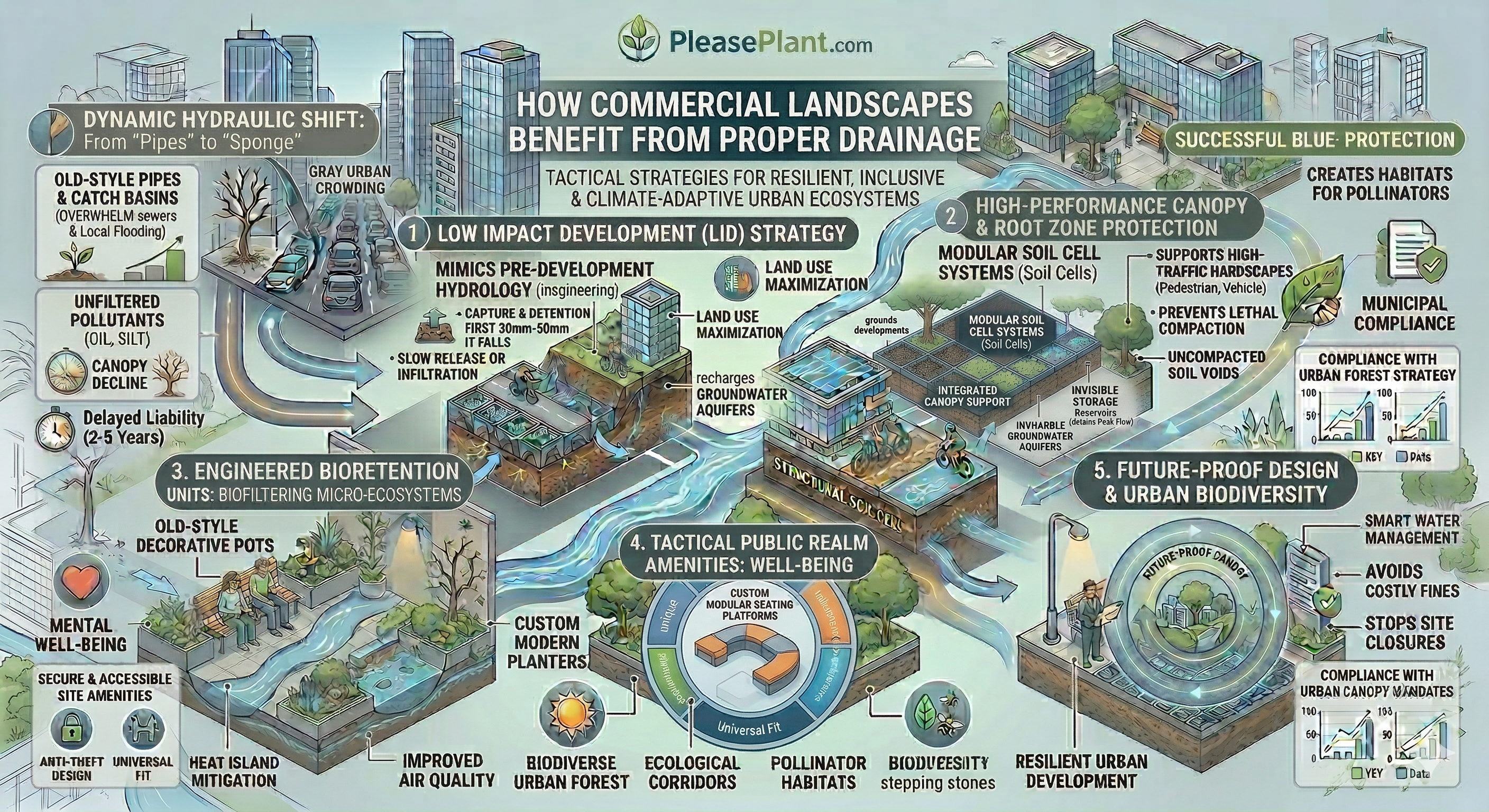
How Commercial Landscapes Benefit From Proper Drainage
In the competitive commercial real estate markets of Surrey, Langley, and Abbotsford, first impressions are everything. A developer can spend hundreds of thousands of dollars on a premium exterior, but if the "soft" assets are sitting in standing water, that investment quickly devalues. Commercial landscape drainage is the silent partner of successful property management; it is the invisible infrastructure that ensures a site remains vibrant, safe, and cost-effective long after the ribbon-cutting ceremony.
Protecting the Biological Investment
Anyone who has worked on a development in the Fraser Valley knows one thing: rain will always win if you ignore it. Without professional site water control systems, high-value urban trees and curated garden beds are at constant risk.
In the Pacific Northwest, "drowning" is a leading cause of plant failure. When water is allowed to pool, it displaces oxygen in the soil, leading to root rot. Proper urban landscape drainage ensures that plants receive exactly what they need to thrive without becoming victims of the region’s intense seasonal downpours.
Reducing Long-Term Maintenance Costs
From a property management perspective, the ROI of stormwater landscape design is found in what doesn't happen. Proper drainage prevents:
-
Hardscape Erosion: Water undermining sidewalks and parking lots, which leads to shifting pavers and expensive "trip-and-fall" liabilities.
-
Salt and Pollutant Buildup: Well-designed systems filter runoff, preventing the accumulation of road salts and oils that can degrade soil health over time.
-
Pest and Mold Issues: Eliminating standing water reduces mosquito breeding grounds and prevents mold growth on building envelopes in damp environments like Chilliwack.
The Designer’s Perspective: Aesthetics Meets Engineering
Modern commercial landscape drainage doesn't have to be industrial or unsightly. By integrating drainage into the landscape design—using bioswales, dry creek beds, and modular underground detention—we can manage high volumes of water while actually enhancing the site's aesthetic. It’s about making the infrastructure work with the architecture, not against it.
Conclusion
A resilient commercial landscape is built from the ground up—starting with the water. By prioritizing drainage during the planning phase, developers protect their assets, reduce maintenance overhead, and ensure a welcoming environment for tenants and visitors alike.
To learn how our high-performance drainage and modular soil systems can protect your next commercial development, contact Please Plant.