
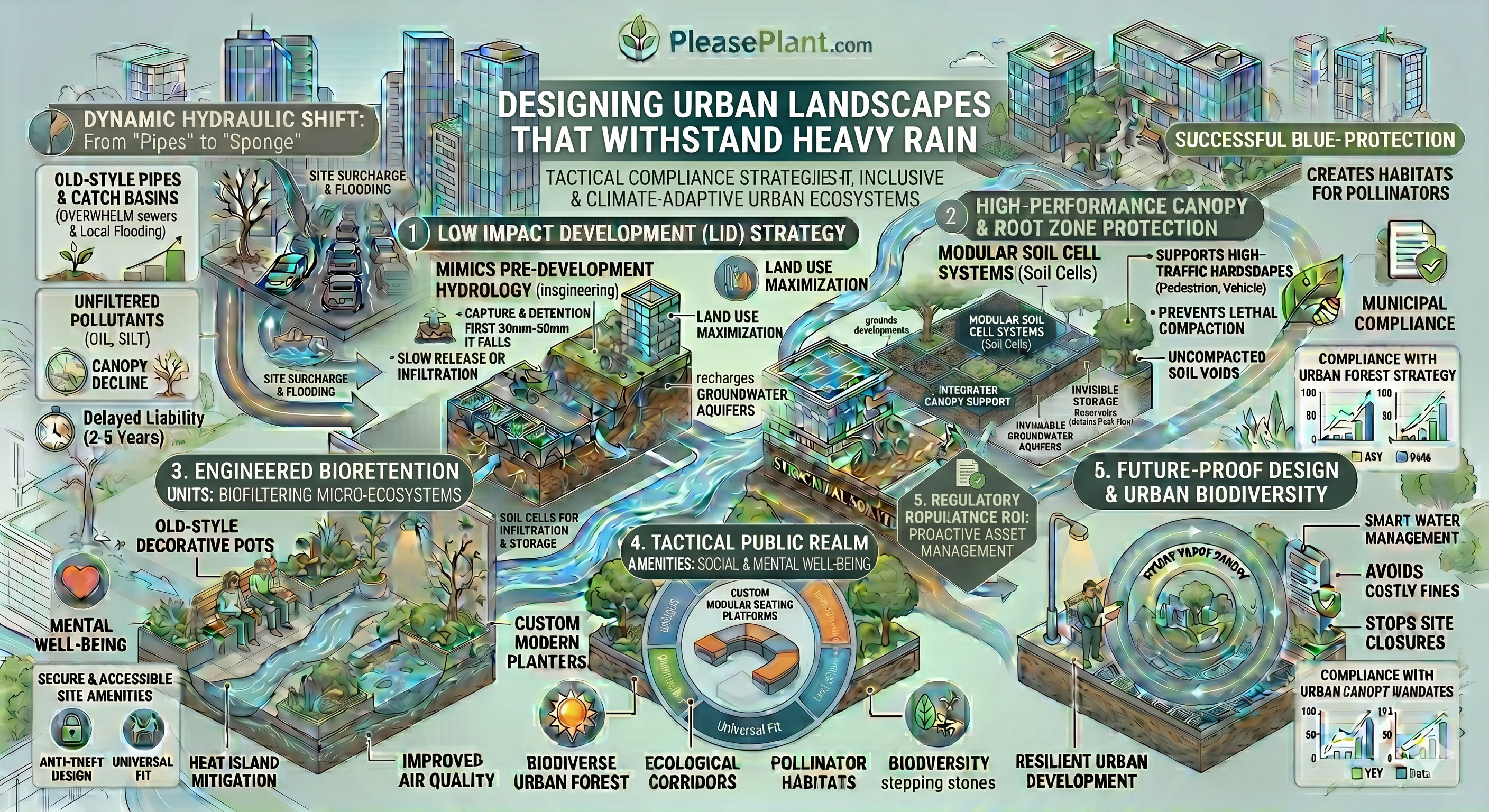
Designing Urban Landscapes That Withstand Heavy Rain
In the Fraser Valley, "heavy rain" isn't just a weather forecast—it’s a design constraint. As cities
like Surrey, Abbotsford, and Chilliwack continue to densify, the challenge for developers and
landscape architects is no longer just about making a site look good; it’s about making it survive.
Rain resilient landscape design has become the primary defense against the "atmospheric
rivers" that define our regional climate.
The Fraser Valley Challenge: Saturation and Runoff
Anyone who has worked on a development in the Fraser Valley knows one thing: rain will
always win if you ignore it. The region faces a unique set of hurdles. High clay content in many
local soils means poor natural infiltration, while high-density urban footprints leave very little
"soft" ground to absorb water. Without proactive site water control, even a premium landscape
can quickly transform into a muddy, eroded liability.
Key Strategies for Rain Resilient Landscapes
To build a site that stays functional during a downpour, designers are shifting toward integrated
stormwater landscape systems. These solutions treat the entire site as a hydraulic tool:
• Bioretention and Rain Gardens: Instead of traditional flower beds, designers are using recessed
gardens that act as natural basins. These zones catch runoff, filter pollutants through specialized
soil, and allow water to slowly percolate back into the ground.
• Modular Underground Storage: In high-density areas where surface space is at a premium,
urban drainage solutions often go sub-surface. High-capacity modular cells can be hidden
beneath plazas or parking lots to hold thousands of liters of surge water.
• Hydro-Zoning Plant Selection: A rain-resilient palette focuses on plants that can handle "wet
feet" during the winter but remain drought-tolerant during BC’s increasingly dry summers.
Protecting the Hardscape
Rain resilience isn't just about the plants; it’s about protecting the infrastructure that surrounds
them. Unmanaged water flow can undermine pavers, cause retaining wall failures, and create
significant "trip-and-fall" hazards. By integrating urban drainage solutions early, you ensure
that water is directed away from building envelopes and pedestrian pathways, preserving the
structural integrity of the site.
The A&D Perspective: Aesthetic Infrastructure
The goal of modern rain resilient landscape design is to make the engineering invisible. A
well-designed bioswale should look like a lush, natural creek bed, and a modular detention tank
should be completely hidden beneath a functional public plaza. When the infrastructure is
beautiful, it adds value to the property while performing its most critical job: keeping the site
dry.
Conclusion
Building for the Fraser Valley means building for the water. By prioritizing site water control
and smart drainage systems, developers create landscapes that are not only beautiful but are
engineered to thrive in the face of BC’s most challenging weather.
To learn how our modular drainage platforms can help you achieve a rain-resilient design on
your next project, contact Please Plant.