
Designing Streetscapes That Handle Rainfall Properly
In the modern urban corridors of Vancouver, Surrey, and Langley, the streetscape is no longer
just a path for movement—it is a high-performance filter for the city. As we move through 2026,
streetscape design Vancouver has evolved to address the "atmospheric river" reality of the
West Coast. The goal for architects and developers is to create environments that manage
thousands of liters of runoff without sacrificing the pedestrian-friendly "main street" feel that
drives local commerce.
The Anatomy of a High-Performance Streetscape
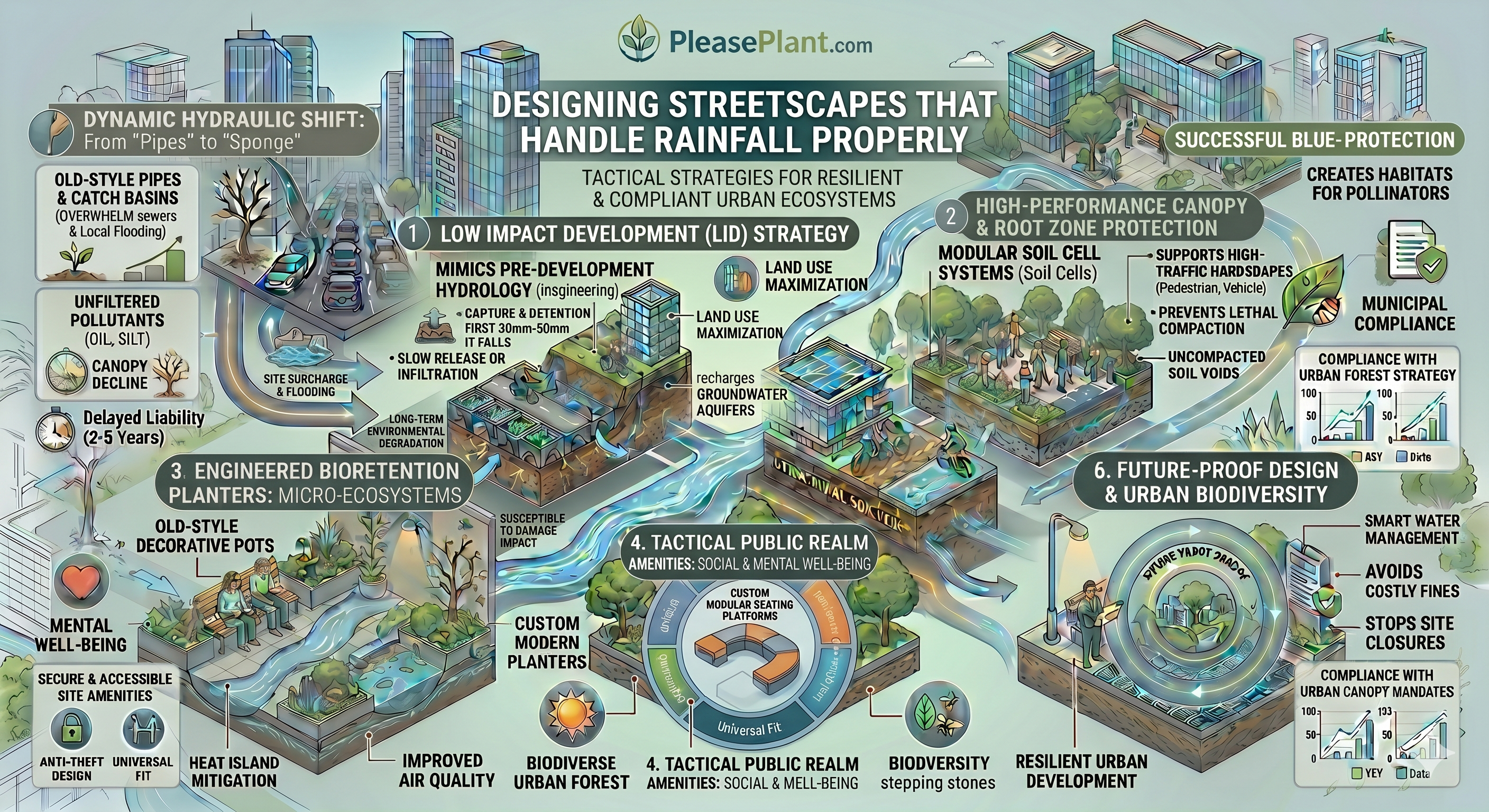
Anyone who has worked on a development in the Fraser Valley knows one thing: rain will always win if you ignore it. Successful stormwater streetscape design relies on a "multi-layered" approach where every element—from the bench to the curb—serves a hydraulic
purpose.
• Integrated Tree Pits: Rather than isolated boxes, modern tree pits are connected via urban streetscape infrastructure like structural soil cells. These allow roots to thrive in uncompacted soil while providing massive underground storage for rainwater.
• Permeable Zones: By utilizing permeable pavers in furniture zones and parking stalls, designers can allow water to infiltrate directly into the ground, reducing the volume of surface water "pooling" at pedestrian crossings.
• Bioretention Bioswales: These "green gutters" use native plants and specialized soil to slow down and clean runoff before it enters the municipal system in Abbotsford or Chilliwack.
Balancing Function with Pedestrian Comfort
The real challenge in city drainage planning is ensuring that infrastructure doesn't create
barriers. Smart design integrates these elements seamlessly:
1. Safety First: Well-designed drainage prevents the "splash zone" effect from passing vehicles.
2. Space Definition: Architectural planters used for drainage also serve to protect pedestrians from
traffic, creating a safer "third space."
3. Year-Round Usability: By managing water efficiently, we eliminate the ice patches and deep
puddles that can make West Coast streets treacherous for those with mobility challenges.
The ROI of Smart Streetscapes
From a development perspective, investing in advanced streetscape design Vancouver pays off
in reduced long-term maintenance and faster municipal approvals. Cities across the Fraser Valley
are increasingly prioritizing projects that demonstrate "sponge city" principles, where the street
handles its own water footprint.
Conclusion
A great streetscape should work perfectly even when the weather is at its worst. By prioritizing
integrated drainage and robust urban infrastructure, we can build cities that are resilient, green,
and fundamentally livable.
To see how our modular drainage platforms and structural soil systems can help you master your
next streetscape project, contact Please Plant.