
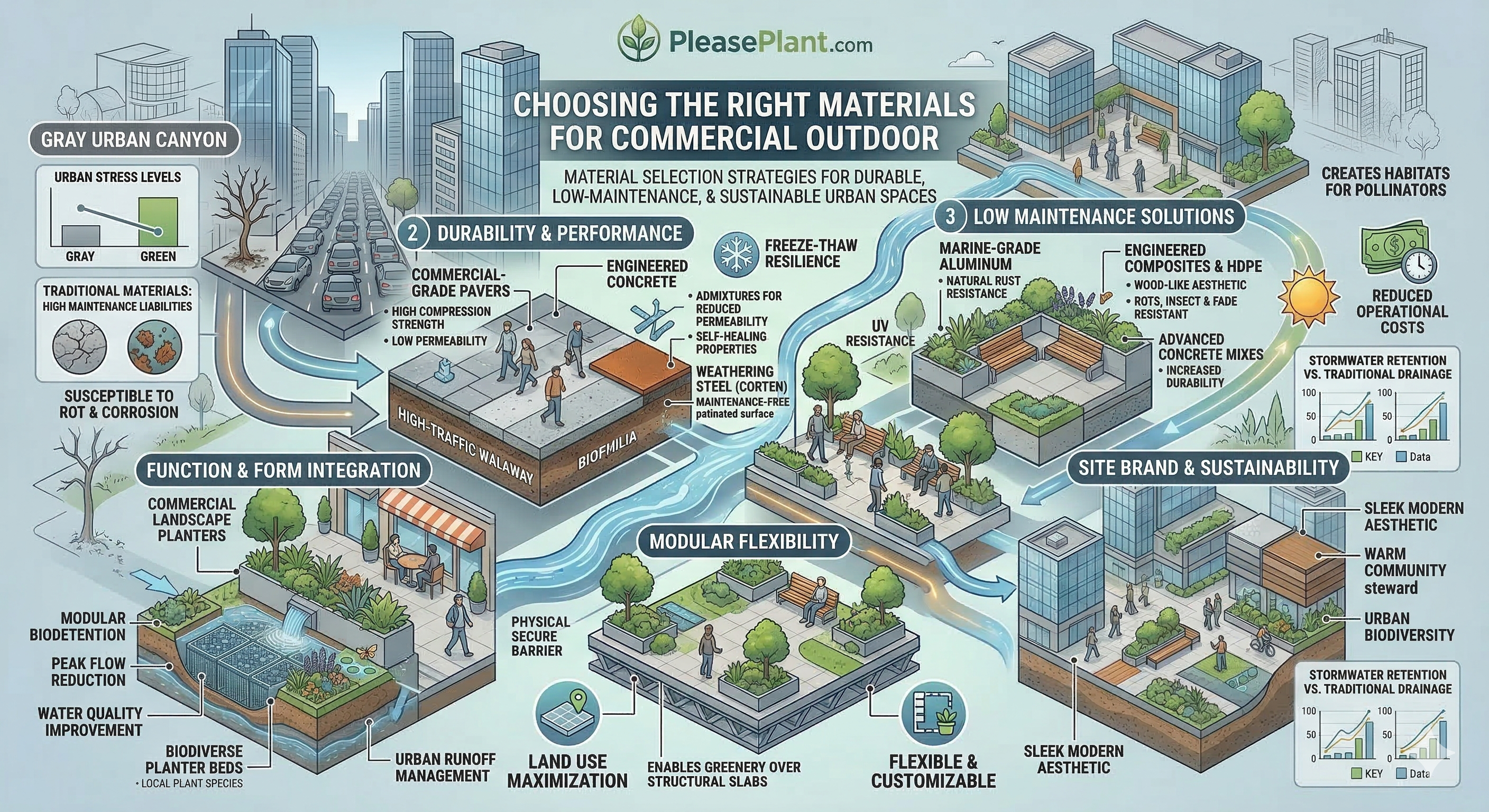
The Material World: Choosing the Right Foundation for Your Commercial Greenery
If you’ve ever walked past a three-year-old development in the Fraser Valley and noticed the planters looking a bit... weathered—and not in a charming, rustic way—you’ve seen the results of a material mismatch. In the A&D world, selecting commercial outdoor planters is about more than just finding a shape that fits the rendering. It’s a technical decision involving weight loads, thermal expansion, and the relentless BC moisture.
Anyone who has worked on a development in the Fraser Valley knows one thing: rain will always win if you ignore it. Whether you are designing a rooftop terrace in Surrey or a public plaza in Abbotsford, the material you choose for your architectural planters dictates the long-term maintenance costs and the overall "premium" feel of the site.
Why Material Specs Matter in the Fraser Valley
The real issue developers face with outdoor infrastructure in regions like Langley and Chilliwack is the combination of high humidity and freeze-thaw cycles. Generic retail-grade pots simply aren't built for the structural pressures of large-scale urban development. High-quality commercial outdoor planters must act as professional-grade infrastructure, supporting soil weight and irrigation systems while resisting the salt and grit of the Pacific Northwest streets.
The Heavy Hitters: Aluminum vs. Fiberglass
When we talk about architectural planters for professional projects, two materials usually dominate the conversation. Here is how they stack up in the field:
-
Aluminum Planters: These are the "gold standard" for high-traffic commercial environments.
-
Durability: They are incredibly resistant to corrosion and will not rust, which is essential given our local rainfall patterns.
-
Customization: Aluminum allows for crisp, clean lines and can be powder-coated in almost any RAL color to match a building's window mullions or branding.
-
Thermal Stability: They handle the BC freeze-thaw cycle without cracking.
-
-
Fiberglass Planters: The go-to solution for weight-sensitive areas like rooftops and balconies.
-
Lightweight: Fiberglass offers a high strength-to-weight ratio, making it easier to transport and install on upper levels.
-
Versatility: It can be molded into organic shapes or textures that are difficult to achieve with metal.
-
Insulation: Fiberglass provides a natural thermal buffer for plant roots, protecting them from extreme temperature shifts.
-
Other Material Contenders
While aluminum and fiberglass lead the pack, other materials occasionally make an appearance in urban planter systems:
-
Concrete: Offers a timeless, brutalist aesthetic and extreme durability, but the weight can be a significant engineering hurdle for anything other than ground-level applications.
-
Weathering Steel (Corten): Popular for its organic, rusted patina that evolves over time. It is stunning in the right landscape but requires careful planning to prevent rust-staining on light-colored pavers.
The Designer's Perspective: Form Meets Function
From a landscape architecture standpoint, the material choice is part of the narrative. Aluminum planters offer a modern, sharp, and permanent feel that suits corporate headquarters or high-end retail in Vancouver. Meanwhile, fiberglass planters allow us to introduce greenery to places that otherwise couldn't support the load, like converted mid-rise office decks.
The best projects integrate these commercial outdoor planters early in the site planning process, ensuring the irrigation and drainage requirements are baked into the civil drawings.
A Long-Term Investment
At the end of the day, a planter is only as good as its ability to survive the elements. Choosing the right material ensures that your urban greenery remains an asset rather than a maintenance headache.
If you’re trying to decide between the sleek profile of aluminum planters or the lightweight flexibility of fiberglass planters for your next Fraser Valley project, Please Plant can provide the specs and the samples to make the choice easy.