
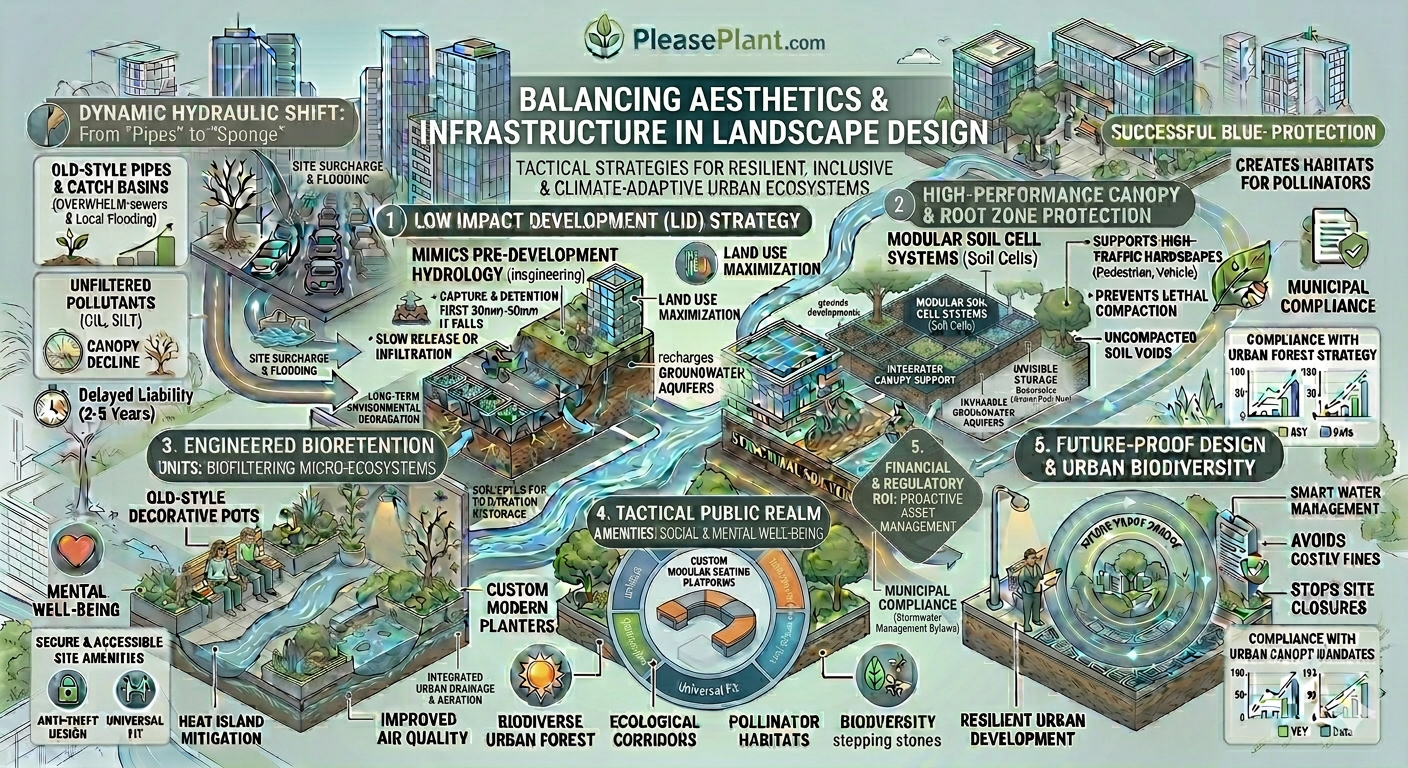
Balancing Aesthetics and Infrastructure in Landscape Design
In the competitive development markets of Vancouver, Surrey, and Abbotsford, there is a
historical tension between the "pretty" and the "practical." Architects want a seamless, lush aesthetic, while civil engineers need robust systems to manage the reality of a West Coast winter.
However, in modern landscape infrastructure design, this divide is disappearing. The most
successful projects in the Fraser Valley are those where the infrastructure is the aesthetic.
The Shift to "Working" Landscapes
The days of hiding site utilities behind a hedge are over. Modern urban landscape planning
treats every square meter as high-performance real estate. We no longer see drainage as just a
pipe; we see it as a bioswale that adds seasonal color and texture. We no longer see a tree pit as a
hole in the concrete; we see it as a sophisticated site design infrastructure that supports a
massive green canopy while managing thousands of liters of runoff.
Integrating Stormwater into the Design Language
Anyone who has worked on a development in the Fraser Valley knows one thing: rain will
always win if you ignore it. The key to balancing aesthetics is to embrace the water rather than
fighting it. Stormwater landscape systems now utilize:
• Architectural Rain Gardens: Using native plants and river stone to turn drainage basins into
beautiful focal points.
• Permeable Hardscapes: Selecting high-end pavers that allow for water infiltration, eliminating
the need for unsightly surface grates and "ponding" areas.
• Modular Sub-Surface Storage: Utilizing "invisible" underground cells that allow the surface to
remain a beautiful park or plaza while the heavy lifting of water detention happens out of sight.
The ROI of Beautiful Infrastructure
From an A&D perspective, prioritizing landscape infrastructure design isn't just about
compliance; it's about value. A site that manages its own water through attractive, natural
systems:
1. Improves Marketability: Premium tenants and residents are drawn to developments that feel
green and resilient.
2. Reduces Long-Term Maintenance: Healthy, well-drained landscapes require fewer
replacements and fewer repairs to undermined hardscapes.
3. Streamlines Approvals: Municipalities in Langley and Chilliwack are far more likely to fast-track
projects that demonstrate "Low Impact Development" (LID) principles.
Conclusion
The most beautiful landscapes are the ones that work the hardest. By integrating functional
infrastructure into the initial design phase, we create urban environments that are as durable as
they are stunning.